Opinion: Why Local Authority Gypsy and Traveller Sites Must Be Protected Now
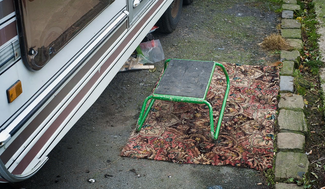
Claire Rice writes that the looming reorganisation of local government must also be the opportunity to drastically change how council-run Traveller sites are managed, regulated and invested in.
Local Authority Gypsy and Traveller sites across England are already living with the consequences of weak legislation, chronic under-investment and poor accountability. Families are enduring dilapidated infrastructure, unsafe living conditions and spiralling costs — not because of how they live, but because of how these sites are owned, managed and regulated.
Now, with the government’s local government shake-up underway, the situation has become urgent.
This reorganisation will decide who owns, manages and controls Gypsy and Traveller sites for decades to come. If the law is not strengthened now, the neglect many residents already experience risks becoming permanent — or worse, invisibly entrenched through asset transfers and sell-offs carried out without proper scrutiny.
Existing Tenancies: What Happens Next?
Where Local Authority sites are transferred to new unitary councils, existing pitch agreements are expected to carry forward, with the new authority becoming the landlord. On paper, this sounds reassuring.
But this is only safe if sites remain in public ownership and within a clear legal framework.
The real danger lies elsewhere.
Across the country, there is growing concern that some councils may choose to sell off their entire Gypsy and Traveller site stock — not necessarily to the new unitary authority, but on the open market, either as a single portfolio or as individual assets.
And that changes everything.
Selling Sites as Assets: A Serious Risk
Gypsy and Traveller sites are not standard housing assets. They require:
- specialist knowledge of electricity and metering systems
- understanding of amenity blocks, chalets and fire safety
- management of drainage, sewers and groundworks
- robust waste collection arrangements
- ongoing maintenance of roads, lighting, trees and shared spaces
If sites are sold to remote private landlords, investors, or housing providers with no experience of this type of accommodation, residents face very real risks:
- repairs becoming slower and harder to enforce
- landlords being geographically and socially distant
- infrastructure problems being ignored or disputed
- no clear accountability when things go wrong
Without strict legal safeguards, sites could be run as low-priority, low-investment assets — leaving residents with fewer protections than they have now.
Will Investment Be Guaranteed?
If councils sell sites, key questions must be asked — and answered publicly:
- Will any sale include a ring-fenced site improvement and investment package?
- Will there be enforceable deadlines for repairs and upgrades?
- Who will manage waste, grounds, roads and shared infrastructure?
- What happens if the new landlord fails to maintain standards?
Without these protections written into law and contracts, sell-offs risk becoming asset stripping by neglect.
Pushed Further Outside the Law
Local Authority Gypsy and Traveller sites already sit in a legal grey area.
They are not fully recognised as social housing, despite residents paying rent and relying on a public landlord. As a result:
- residents often cannot access the Housing Ombudsman
- repair standards and response times are weak or unenforceable
- new protections around damp, mould and disrepair may not apply
- accountability depends on goodwill, not rights
If sites are sold separately from mainstream social housing stock, this exclusion will deepen. Instead of moving closer to protection, sites risk being pushed even further away from the social housing framework — further marginalised in law, policy and practice.
Local Authority, Housing Association or Private Landlord?
Some argue that transferring sites to housing associations could improve conditions. There are potential benefits:
- stronger regulatory oversight
- clearer complaints mechanisms
- better access to capital investment
But this is not guaranteed — and without specific legislation, even housing associations can deprioritise Gypsy and Traveller sites.
Private ownership poses even greater risks unless exceptionally strong protections are put in place.
The core issue is not simply who owns the land — it is what legal duties they are bound by.
Why This Moment Matters
Local government reorganisation is not just administrative. It is a once-in-a-generation restructuring of power, assets and responsibility.
Decisions are being made now about:
- whether sites stay in public ownership
- whether they are bundled, sold or outsourced
- who controls repairs, investment and allocations
If Gypsy and Traveller communities are not present at the table, their homes will be an afterthought.
The Case for Urgent Legal Reform
This is the moment to be clear and unequivocal:
Local Authority Gypsy and Traveller site pitches must be recognised in law as social housing — or treated as such for standards, enforcement and redress.
That means:
- enforceable repair and maintenance standards
- access to the Housing Ombudsman and regulators
- protection during transfers or sales
- mandatory investment in safe, habitable infrastructure
- resident consultation and participation in governance
This is not about special treatment.
It is about equal protection under the law.
A Call to Action
Gypsy and Traveller organisations, activists and residents must:
- attend local government reorganisation meetings
- challenge proposals to sell or outsource sites
- demand transparency, consultation and legal safeguards
- insist that no decisions are made without those affected
Once sites are transferred or sold, it will be far harder to undo the damage.
Now is the time.
Before ownership changes.
Before responsibility is diluted.
Before neglect is locked in for another generation.
Homes should not depend on goodwill.
Rights should not depend on who owns the land.
And Gypsy and Traveller communities must not be forgotten in the name of reform.
By Claire Rice
(Lead image: Still by Percy Dean from Turning Point video)
Regular Travellers Times contributor Claire Rice is a Romany Gypsy campaigner who lives in Essex. Claire has in the past worked as an advocate for Herts GATE, and now works for GaTEssex and Drive 2 Survive. Claire is educated to postgraduate level and has a Masters Degree in Criminology.
FURTHER READING BY CLAIRE RICE:
The Local Government Shake Up: What Gypsies and Travellers Need to Know | Travellers Times