Financial compensation needed to address ‘Tinker Experiment’ abuses – says Scottish Human Rights watchdog
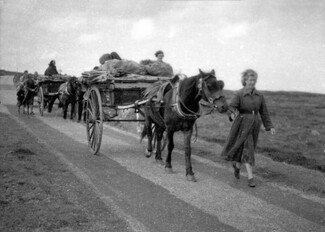
The Scottish Human Rights Commission report “No Man’s Land”, launched today, finds that victims were forced to give up their culture and in some cases their children
“My parents, in common with many others, were forced to stop travelling and live in an old hut in the woods as part of the Tinker Experiment" – says Tinker Experiment victim Roseanna McPhee
Report call for financial compensation, cultural investment and further truth recovery following 15-year battle for justice by victims of the notorious ‘Tinker Experiments’
The Scottish human rights regulator has found that the Scottish authorities put the rights to health, education and employment of the victims of the Tinker Experiment at risk by forcing Gypsy Travellers to assimilate in substandard housing.
“Victims were forced to give up their culture and in some cases their children. The apologies are vital, but it is not enough on its own,” said Professor Angela O’Hagan, Chair of the Scottish Human Rights Commission.
“Scotland must now put things right and support those who continue to live with the harm,” added O’Hagan.
“My parents, in common with many others, were forced to stop travelling and live in an old hut in the woods as part of the Tinker Experiments," said Roseanna McPhee, a victim of the Tinker Experiments who still lives at one of the Experiments sites at Bobbin Mill.
“It was supposedly about integration, but there was no real integration with the community. We were put in the woods on the edge of town in sub-standard accommodation, without electricity or running water,” added Roseanna McPhee.
“We had to study by candlelight and wash clothes in a tub outside, boiling water on a small stove or outside stick fire, even in the winter. We only got hot water and electricity in 2010. We were bullied at school and discriminated against all our lives, it’s been very hard to get gainful employment, and we’re still harassed here at Bobbin Mill.”
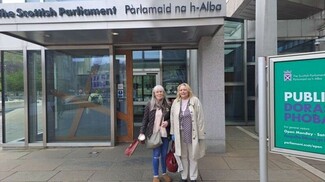
The Scottish Human Rights Commission is calling for ‘Transformative Reparations’ by public bodies in response to the ‘Tinker Experiment’. Recommendations include:
- financial compensation to victims and families
- rehabilitation, cultural investment and community development
- further truth recovery on harms to children
- improved and culturally appropriate accommodation
Redress should be designed and led by victims and meet international human rights standards.
On hearing the news, Roseanna McPhee commented:
"The report findings are very much welcomed by the victims and campaigners who agree that the national apology falls short of international standards and that Redress and Reparations which have been stalled until after the Election - some 15 months after the Apology - is a cynical tactic.
All the Research Reports - archival reports from St. Andrews University and that of Dr. Robert Fell - taken in complement with today's report stress the urgent need to assess the victims' medical, social and economic needs but this has not happened, and to start the Rehabilitation and Reparation processes with all due haste.
The Scottish Government was asked for personal written apologies by some of the victims as well as medical therapies at a recent meeting but there has been no tangible response to either request.”
Victims of the Tinker Experiment, such as Roseanna McPhee, have been campaigning for justice for “decades”.
Key findings from the Scottish Human Rights Commission investigation and report include:
- The Scottish Government and local authorities have failed, and continue to fail, to uphold an adequate standard of living protected by Article 11 of ICESCR in relation to adequate housing for Scotland’s Gypsy Travellers. Failure to uphold Article 11 of ICESCR continues today through the provision of substandard accommodation at sites including: Bobbin Mill, Double Dykes and Tarvit Mill as highlighted by the Scottish Housing Regulator.
- Examples of substandard accommodation funded by the State include the use of asbestos wood walls in the Nissen hut at Bobbin Mill. Additionally, there is no electricity at Bobbin Mill until the 2010s.
- By removing children from a family of Gypsy Travellers at Bobbin Mill for no other reason than to ease overcrowding, when alternative measures were available, the State failed to comply with Article 8 of the ECHR regarding respect for private and family life. This has caused mental distress and prevented Scotland’s Gypsy Travellers from conducting their family life and has caused significant and lasting trauma.
- Removing children and placing them into care homes, including Kippen House, raises human rights issues in relation to Article 9 of the UNCRC.
- Local councils sought to roll out the approach taken at Bobbin Mill in a number of areas across Scotland.
- The Scottish Government apology in June 2025 does not meet human rights standards adopted by the UN General Assembly in relation to remedy and reparation for victims of human rights violations.
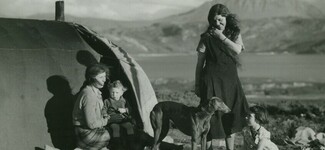
Clare MacGillivray, Director of Making Rights Real, a Scottish Human Rights charity, said:
The Scottish government said it welcomed the publication of the report and would carefully consid
"This is a clear and unequivocal call for reparations for the most grotesque human rights abuses against some members of the Gypsy Traveller community in Scotland.
“Victims are still living in substandard accommodation, still facing discrimination and inequality. And as human rights defenders have had to endure years of victimisation and gaslighting by authorities.
“This is a wake-up call for the duty bearers and institutions that were complicit in this harmful behaviour towards families to provide redress, to super charge systemic changes to advance the rights of all Gypsy Travellers in Scotland. And a lesson for all in positions of power to listen and take action where rights holders raise human rights concerns.
I pay tribute to the tireless campaigners who have given decades of their lives towards seeking justice. That must now be delivered."
Speaking to the BBC, the Scottish Government said it welcomed the report and would carefully consider its contents.
A spokesperson said:
"We are improving the lives of Gypsy Traveller communities in Scotland through the second Gypsy Traveller Action Plan., external
"Backed by £1m over the past five years, this is driving positive change to health, education, accommodation, poverty, and tackling discrimination.
"Alongside this, over £500,000 has been invested into the Community Health Worker programme to support Gypsy Traveller communities overcome barriers to accessing health and other public services.
"The Scottish government continues to engage closely with affected community members to explore further action in the immediate and medium term."
Roseanna McPhee said that Tinker Experiment victim campaigners are now regrouping to consider their next steps in response to the damning report.
Read the full Scottish Human Rights Commission report on the ‘Tinker Experiments’ by following this link: “No man’s land" A human rights assessment of the ‘Tinker Experiment’ and redress for its victims
TT News/Making Rights Real
(Lead photograph: Scottish Travellers/Nawken (Stewart clan) on the move in Sutherland, 1958. By Sandy Paton, courtesy of the Robert Dawson collection.)
FURTHER READING: ‘Cruelty men, Nazis and Tinker Experiments’ – leaked report reveals the cultural genocide of Scotland’s Travellers | Travellers Times