Opinion: Buckles Lane - We Must Not Let One Criminal Case Define Entire Cultures
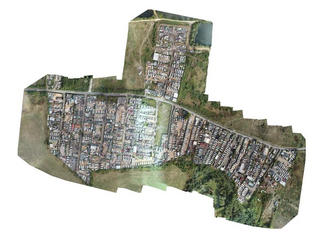
In November 2024, armed officers executed a warrant at Buckles Lane in South Ockendon, Essex, following intelligence in a long-running investigation into the supply of illegal weapons.
Inside three caravans, police found converted firearms, ammunition, improvised explosive devices and extremist material. This was not a routine seizure — it was part of a decade‑long investigation that had traced a converted pistol to London and identified a wider network of criminal activity.
The arrested man, 60‑year‑old Thomas McKenna of Buckles Lane, and his partner were charged with multiple offences including converting blank‑firing weapons into lethal firearms, possession of prohibited explosives and collecting terrorist information. On 12 February 2026, at Kingston Crown Court, McKenna was sentenced to 16 years’ imprisonment plus a further five years on licence, with co‑defendants also receiving substantial custodial terms.
The narrative in many headlines and broadcasts has since shifted from reporting the criminal case itself to speculation about the location of the raid — repeatedly described as a “Traveller site” — and an implication that this crime somehow reflects on all Gypsy or Traveller people. That distortion is both inaccurate and deeply damaging.
If you want to see how this story has been circulated, this is the news clip from LBC, widely shared online, that helped shape public perception:
👉 https://youtu.be/6PUxADrquOw?si=OahkT7th7-gkus_1
Buckles Lane Is Not a Gypsy or Traveller Site — And That Matters
Buckles Lane is a sprawling mixed trailer estate with a complex planning history. While parts of the land were historically associated with travelling Showpeople and parts of it, at least, still are. Showmen are a work‑based occupational group – according to the centuries-old Showmen’s Guild - with their own planning category under UK planning laws and their own rich heritage, and much of the Buckles Lane area is unauthorised development, having grown from its original authorised core. The estate today houses residents from many different backgrounds who far outnumber Showmen residents according to a research report commissioned by Thurrock Council which was published in 2023. Buckles Lane is not a dedicated or statutory Gypsy and Traveller site under planning law.
Yet in commentary on LBC and in social media threads, the shorthand “Traveller site” is used liberally — as though location alone explains or contextualises the crime. That is misleading. It equates the criminal actions of an individual and a network with an entire set of cultures and identities, without regard for accuracy or nuance.
Gypsy and Traveller Are Cultures — Not Vehicles or Sites
Gypsy and Traveller identities are rich cultural and ethnic identities, not defined by whether someone lives in a caravan, a static home, or bricks and mortar. Far from being a transitory housing type, caravans and sites hold cultural significance for many — as do yards with chalets or bungalows — as spaces of family, gatherings, heritage and continuity.
The truth is that most Gypsy and Traveller people now live in houses, with many others living on yards with permanent structures by choice. Local authority Gypsy and Traveller sites are often occupied deliberately, because that form of living supports extended families and cultural practice. They are not “problem backdrops to crime.”
Yet when media and commentators hyperlink caravans and crime, whole communities are implicitly placed under suspicion.
Trailer and Park‑Home Living Reflect Broader Housing Pressures
We must also recognise the wider social context that has given rise to estates like Buckles Lane.
Across the UK, a chronic housing crisis has made affordable accommodation increasingly scarce. Skyrocketing rents, long social housing waits and insecure private tenancies have driven many working‑class people — from diverse backgrounds — into non‑traditional forms of housing, including trailers and park homes. That context is ignored when statements about “sites” are deployed without nuance.
When mobile home living is presented as a lifestyle choice in some contexts, the language is celebratory. But when similar accommodation is occupied by marginalised or working‑class people, the framing too often becomes judgemental, even hostile.
And when that framing intersects with longstanding prejudice about “Travellers,” the result is a recycled cultural stereotype — one with real and lasting consequences.
The Real Impact of Stereotyped Coverage
There is nothing hypothetical about the real‑world harm that arises from careless narrative framing.
Gypsy and Traveller individuals and families regularly report:
- Refusal of service in pubs, shops and holiday sites.
- Inflated insurance costs or flat refusals because of postcode or vehicle type.
- Hostility at planning committees when applying for lawful pitch provision.
- Children bullied or singled out at school because of harmful associations in media.
Each time a broadcaster or commentator positions a criminal case as though it were anchored in “Traveller culture,” these prejudices are reinforced. Stereotypes gain traction. Policy debates harden against honest engagement. People’s lives are made harder.
That is how discrimination sustains itself: not always through explicit hate speech, but through repeated implication and association.
Accountability Is Individual — Not Collective
The man who manufactured and distributed illegal weapons from that caravan workshop is accountable for his actions. The police investigation and Crown Court sentencing reflect that accountability. But it is neither fair nor accurate to allow this individual’s crimes to be repurposed as shorthand for entire communities.
We would never describe a suburban estate as “to blame” for the actions of one resident. Yet when caravans and “Travellers” and crime are placed side by side in headlines and broadcasts, whole ethnic groups are implied to share responsibility. That is structural prejudice.
Measured, responsible reporting matters. Nuance matters. And communities deserve more than to be repeatedly dragged into narratives that were never about them in the first place.
By Claire Rice, BSc (Criminology), MA (Criminology).
I am Romany, and my research as a criminologist explores the intersection of crime, media representation and the structural discrimination experienced by Gypsy and Traveller communities. I write this article with both academic insight and lived experience because too often, stories about our communities are inaccurately framed in ways that harm us all.
(Lead image – Buckles Lane area © Opinion Research Services/Thurrock Council)