Rethinking Gypsy, Roma and Traveller participation in higher education
Universities say they are committed to equality and social mobility, yet Gypsy, Roma and Traveller communities remain largely invisible in their policies, courses and culture. Julia Morgan, Hazel Marsh and Colin Clark, the editors of a new book ask why, and what needs to change.
Universities often present themselves as committed to equality, diversity and social mobility. But for many Gypsy, Roma and Traveller communities, higher education is still a place of serious inequality, poor representation and exclusion. Despite decades of work to widen access and participation, the communities remain largely invisible in university policies, courses and culture. Why is this the case? What needs to change?
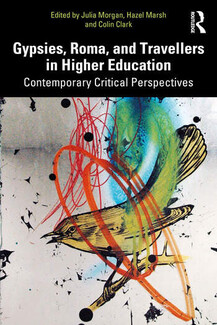
These questions are the starting point for our new edited collection, Gypsies, Roma, and Travellers in Higher Education: Contemporary Critical Perspectives. Bringing together academics, practitioners, students, graduates and community members, the book investigates the structural, cultural and institutional barriers that continue to shape educational opportunities and experiences. It also challenges the assumptions behind how universities understand disadvantage, inclusion and achievement.
Moving beyond the deficit model
One of our core arguments is that discussions about Gypsy, Roma and Traveller participation in higher education have tended to be framed in terms of “deficit”. That is, low participation is explained by cultural attitudes, family expectations, educational aspirations or supposed community resistance to formal education.
Such explanations, we find, are deeply problematic. They put the responsibility for educational inequality on communities themselves, rather than looking at the institutions and social structures that create and deepen disadvantage.
The contributors to this volume show why a different approach is needed. Racism, historical exclusion, economic insecurity and unequal educational opportunities are not minor or peripheral concerns. They are essential to understanding why people’s educational paths turn out as they do, and why access to university remains so uneven and unfair.
The chapters addressing Romani history, academic-community partnerships, whiteness and experiences of compulsory schooling help set out this wider context. They remind us that inequalities faced at university cannot be separated from longer histories of racism, marginalisation and institutional discrimination.
Questioning the 'inclusive university'
The collection asks readers to question the assumption that universities are inherently progressive, inclusive and “good” institutions.
Higher education in the UK, and elsewhere, is increasingly run like a business and highly competitive, with widening participation measured through stark numbers: recruitment figures, institutional targets, performance indicators and the like. Although such measures can help support positive change, they can also reduce complex questions of equality and justice to whether institutions are meeting their targets.
This raises a very important question: are universities genuinely transforming themselves to accommodate historically excluded communities, or simply expecting those communities to adapt to existing institutional norms?
This distinction, we argue, matters. Increasing student numbers is important, but participation cannot be understood only through entry qualifications, admissions, or progression and retention statistics. It must include belonging, recognition, seeing your community’s history and ideas represented, student wellbeing, and opportunities beyond graduation day.
Chapters on the commercialisation of universities (the “neoliberal university”), widening participation, distance learning and career guidance highlight the limits of approaches that focus on access without considering the experiences that follow.
The power of lived experience
A distinctive feature of this collection is that it brings community voices into direct conversation with academic research and institutional practices.
Deeply moving, powerful and personal accounts from Gypsy, Roma, Traveller and Showmen contributors show the complicated relationships between educational achievement, identity, belonging and social mobility.
These contributions confront “heroic” narratives of individual success against the odds. While such achievements must be celebrated, exceptional personal journeys must not become a substitute for confronting systemic inequality. The language of “resilience” can hide the conditions that make resilience necessary in the first place.
We also appreciate that Gypsy, Roma and Traveller communities are not all the same. Experiences can differ greatly across ethnic identities, national contexts, gender, class, migration histories, languages and family circumstances. Effective widening participation policies must acknowledge these differences rather than treat communities as one uniform group.
Decolonising knowledge and challenging institutional power
Another important theme of the book concerns whose histories, knowledge and experiences are recognised within higher education.
Gypsy, Roma and Traveller communities have too often been treated as subjects of academic study rather than as producers of knowledge in their own right. Their histories and intellectual contributions remain marginal within many university curricula.
Chapters addressing decolonisation and community cultural wealth (the knowledge and strengths communities already hold) challenge this imbalance. They encourage universities to reconsider not only what is taught, but who decides what counts as “legitimate” knowledge.
This requires a lot more than adding occasional references to Romani history or celebrating cultural diversity through isolated initiatives. It demands sustained engagement with representation, power within institutions, the unfair dismissal of community knowledge (known as epistemic injustice), and meaningful community participation.
As such, universities must be prepared to learn from communities rather than simply conduct research about them.
From partial recognition to meaningful change
What does this book not do? We do not argue that this collection provides a comprehensive solution to the inequalities it identifies. Indeed, one of its important contributions is to expose the limitations of existing knowledge and practice. This book is about beginning an informed discussion of where we are, and where we need to get to.
As such, long-term research that follows people over time is needed to understand educational journeys across different stages of life. Far more comparison between national higher education systems is needed too. We also need better evidence on whether university initiatives work, particularly those designed to support progression, retention and graduate employment.
There is a pressing need to move beyond short-term projects and individual institutional champions towards properly resourced, accountable and lasting change.
One significant step forward would be recognising anti-Gypsyism and anti-Roma racism as institutional concerns, embedding community participation within university decision-making, improving educational and careers support, and ensuring that curricula reflect the histories and contributions of marginalised communities.
Ultimately, moving forwards, our question is quite simple: what kinds of universities are we asking Gypsy, Roma and Traveller students to attend?
If higher education is truly committed to social justice, it must be willing to interrogate its own practices, assumptions and inequalities.
Our hope is that this book contributes to that conversation, helping to shift the debate from access and aspiration towards recognition, belonging and institutional transformation.
The responsibility for change cannot rest with Gypsy, Roma and Traveller communities alone. It must also rest with the universities that have historically excluded them.
Gypsies, Roma, and Travellers in Higher Education: Contemporary Critical Perspectives, edited by Julia Morgan, Hazel Marsh and Colin Clark, was published by Routledge in October 2026. Further details here.
(Main image: Book cover – Daniel Baker)
Julia Morgan, Hazel Marsh and Colin Clark for Travellers Times