Belonging Without Hiding – by Tyler Brown
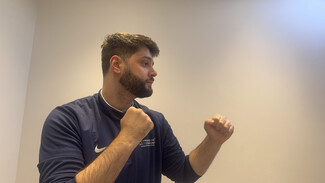
Sport should be a place to thrive, not to hide. Tyler Brown explores what real inclusion means for Gypsy, Roma and Traveller people, wherever they choose to participate
Sport has always been a place where I can feel confident. Whether it was football, boxing or basketball, throughout my life it has been integral to who I am. However, football was also one of the first places where I became aware that being a Romany Gypsy could make me feel different and segregated from the same teammates and peers I grew up with. There were jokes and comments which made me realise that sometimes it was easier to hide that part of myself than defend it. In a perfect world, sport is for everyone, but can we really say that when some people feel they have to hide who they are just to belong?
My experience raises a wider question about how many Gypsy, Roma and Traveller people may be put off sport before they ever have the chance to feel like they belong. Discrimination is only one potential barrier. Cost, transport, previous negative experiences and a lack of trust can all make participation more difficult, while simply feeling that a club or sport is not a place for people like you can be enough to keep someone away. This can be made worse by stereotypes surrounding our communities, particularly ideas around violence, crime and antisocial behaviour. These concerns go beyond my own experience, with research from the European Roma Rights Centre identifying antigypsyism as a significant barrier to Roma, Sinti and Traveller participation in sport. When these perceptions exist before someone has even walked through the door, being technically welcome does not necessarily mean feeling included.
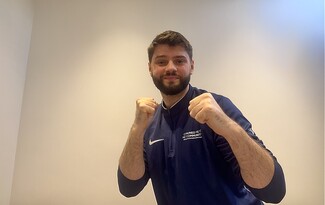
Despite my negative experiences, there is one sport that has always felt like a safe space. Boxing allowed me to feel comfortable and unapologetically myself. My decision to start boxing came from my dad training, but growing up seeing people like Tyson Fury and Billy Joe Saunders also made me feel that being successful in sport was possible for someone from my community. This perfectly illustrates the importance of having role models who are just like you: when something feels familiar, it can feel achievable. Boxing has a strong place within the wider Romany and Traveller communities, including my own family, where relatives often encourage younger generations to participate. I believe that when families can see both a welcoming environment and representation at the highest level, they feel more confident entering that space. This is something boxing should be proud of, but it raises an important question: why haven’t other sports created that same sense of belonging?
Looking beyond the ring, representation becomes harder to see. I’m not only talking about professional athletes, but also coaches, referees, sport development staff, lecturers and people working within national governing bodies. I’m not saying they don’t exist; however, I can’t ignore how difficult it is to name openly Gypsy or Traveller people in these positions. This brings us back to visibility. We cannot assume absence simply because people aren’t visible, particularly when some may choose not to publicly disclose their identity. There is also a problem with the data. In its current adult participation data, Sport Wales combines Gypsy or Irish Traveller respondents within the broader ‘White Other’ category alongside other groups. This means we cannot determine a specific participation rate from the published figures. If representation isn’t clearly visible or adequately measured, how can we identify where change is needed or whether progress is actually being made?
If organisations believe they are doing enough for inclusion, but concerns remain around participation and representation, they need to start going into and educating themselves about our communities. This could mean working with schools, visiting Traveller sites and nearby community spaces, or holding community sports days and cultural appreciation events. They need to build trust and gain an understanding of the community before expecting participation, listen to the concerns of families and participants, educate staff and coaches, and stop assuming inclusion is guaranteed. If sporting organisations want Gypsy, Roma and Travellers to enter their spaces, they first need to be willing to enter ours.
My hope for change goes beyond simply seeing an increase in participation. Sport can create pathways into coaching qualifications, young leader awards, first aid, safeguarding and mental health qualifications, work experience, internships and eventually employment within sport. I’ve experienced the value of this type of pathway myself through a leadership initiative at Cardiff Metropolitan University, where young people develop skills by learning to coach others. Similar opportunities could give young Gypsy and Traveller people qualifications, experience and a pathway into the wider sporting workforce. The end goal shouldn’t just be seeing more of us participating on the pitch, court or in the ring, but seeing us represented behind the scenes and at every level of sport.
To any young Traveller who feels they have to hide who they are to belong: it’s okay to feel frightened, but you shouldn’t have to pretend you’re okay with something that hurts you just to fit in. You deserve to feel safe, represented and proud of who you are. More importantly, there is no reason why you can’t be part of the change that means the next generation never feels they have to hide in the first place.
By Tyler Brown
Tyler Brown is a third year student studying sports coaching at Cardiff Metropolitan University
(Photographs of Tyler Brown courtesy of Tyler Brown)