‘A fair chance’: what Roma people told government researchers about hope, pride and fear
A new ONS report lets Roma people speak for themselves about hope, pride and belonging in England and Wales, and about why many still feel unable to say who they are.
“My biggest hope was that my son could go to school and feel like he belongs.”
Sofia, a Slovak Roma woman in her twenties, shared these words with researchers from the Office for National Statistics (ONS), the government body responsible for running the Census. She was talking about life before coming to the UK, when school was difficult for her son and she hoped he would have “a fair chance”.
Her words are part of a new report, Lived experiences of Roma people in England and Wales: 2025, published on 22 September. It explores Roma people’s experiences of moving to the UK, accessing services, identity and belonging. All the names used in the report are pseudonyms.
The report captures challenges that many Roma people continue to face, but it also tells a story of hope: of young people looking towards the future, communities supporting one another, and people determined to make sure the next generation has opportunities they may not have had themselves.
ONS has produced a short film sharing the report’s main findings, available in English and five variants of Romanes. Watch it on Vimeo.
A community telling its own story
This is the first ONS study focused on the lived experiences of Roma people. It is not the first ONS report to explore Roma communities. It follows ONS’s 2022 study of Gypsies’ and Travellers’ lived experiences, after which the organisation agreed that Roma experiences needed a separate project to reflect their distinct identities and needs.
The 2021 Census counted 103,020 people in England and Wales who described their ethnic group as Roma, using a tick box or write-in response. The report notes that the actual number may be considerably higher, and points to the Traveller Movement’s briefing on Census 2021.
What makes this new study particularly significant is the way it was carried out, with Roma people playing a central role in the research itself.
Between February and June 2025, ONS conducted 63 in-depth interviews with Roma participants, 19 interviews with key informants (people who work with Roma communities) from charities, local government and services, and five focus groups. Eleven Roma peer researchers led 54 of the 63 interviews, meaning participants could speak with someone from their own community.
Participants came from the Czech Republic, Slovakia, Poland, Romania, Bulgaria and Hungary, as well as people born in the UK. They lived across five areas: the East of England, the North West, London, Yorkshire and the Humber, and Wales. ONS worked with Migration Yorkshire, Roma Support Group and the University of Sheffield, alongside eight community organisations.
Travellers Times spoke to Mihai Calin Bica, Policy and Campaigns Coordinator from Roma Support Group, and he said this approach matters. Roma people from different Central and Eastern European countries were interviewed by Roma researchers originally from the same countries, he explained. Working with Roma people to research Roma communities, he said, gives “an increased likelihood for genuine, honest conversations to happen”. It also helped develop research skills and experience within the community.
An ONS spokesperson said that they are "Working with peer researchers helped us to better understand how diverse Roma communities are and to design the research to reflect that.” They also reminded us how important it is to recognise and celebrate strengths, rather than only telling the story of the challenges some Roma people face.
Roma people are not simply the subjects of research, but active participants in shaping how their experiences are understood.
Roma are not Gypsies or Travellers
The report makes clear that Roma people have distinct identities and experiences. Many Roma people in the UK are settled, and many have migrated here from Central and Eastern Europe. Yet forms, services and institutions still often group everyone together under the term ‘GRT’.
Tamas, a Hungarian Roma participant in a focus group, said the category “Gypsy, Roma, Travellers” is “not the same at all”, and wondered: “Do I need to tick there?”
Mihai said this confusion has practical consequences. It can mean “professionals assuming that Roma live on Traveller sites when Roma are in their vast majority settled”, he explained. A Traveller service might then be commissioned to work with Roma communities without the necessary language skills, cultural knowledge or contacts – and the same can happen in reverse.
Our own investigation in January found that the rise in students recorded as ‘Gypsy or Traveller’ at university is largely driven by Roma students. According to Higher Education Statistics Agency (HESA) figures, nearly two-thirds of the 2,535 ‘Gypsy or Traveller’ students starting university in 2023/24 identified as Roma.
There may be change ahead. The 2021 Census was the first to include a Roma tick box, allowing ONS to produce dedicated statistics on the Roma population. The report adds that the Government Statistical Service (which is reviewing how ethnicity data is collected across the public sector) plans to publish a new standard for collecting ethnicity data by the end of 2026. A new ethnicity question is being developed for use across government, including in the next census. An ONS spokesperson told Travellers Times: “We expect this to include a Roma tick box, while a separate Gypsy and (Irish) Traveller tick box is being considered.” Nothing has been confirmed yet.
Pride in who we are
Alongside the challenges, many people interviewed for the report spoke about the freedom and confidence they had found in the UK.
Xena, a Czech Roma woman in her forties who has lived here for between 11 and 20 years, described being Roma as “just like a beautiful addition” to who she is. In the Czech Republic, she said, she used to take her hoop earrings off in public. “Whereas here, I’m proud. I just love it.”
Richard, a Czech Roma man in his fifties, said he felt “beautiful because no one was moving away from me”.
Mihai said the report “captured very well those real lived experiences” and reflects the mix of hardship and hope he sees through his work every day. He said Roma people have “had to go through a lot” but are “always hopeful and positive when thinking ahead”.
He was particularly struck by the younger generation. “It was nice to see the input from the younger generation of Roma, those educated in the British system,” he said. He was surprised by how positively they spoke about their Roma cultural experiences growing up, and by “their aspirations to do something to help their immediate or wider Roma community”.
That sense of pride and responsibility runs through many of the report’s stories. People speak about wanting to create opportunities for their children, support others and make sure Roma heritage is celebrated and valued.
The strength of community
The report offers plenty of examples of people turning their own experiences into support for others.
Roma-led research: Roma peer researchers led 54 of the 63 interviews. They were also invited to a workshop where they helped interpret the findings, ensuring community perspectives remained central to the research.
Community groups: Dariusz, a Polish Roma man in his sixties, attended meetings and gatherings organised by a community organisation. “The CSO gave me a lot of knowledge,” he said, explaining that within six months he understood his housing rights. (CSO means civil society organisation, such as a local charity.)
Giving back: Elsa, a Bulgarian Roma woman in her twenties, now volunteers to help others. Her own secondary school years were the hardest, she said, and she had nobody to guide her. Now, she wants to offer that support to others: “I want to be the one who’s holding their hand and guiding them.”
Role models: Justyna, a non-Roma key informant working in local government, described how work with the community began with “literally five people on a table”. Justyna said the growth of grassroots groups is helping create role models, giving younger Roma people more reasons to feel proud.
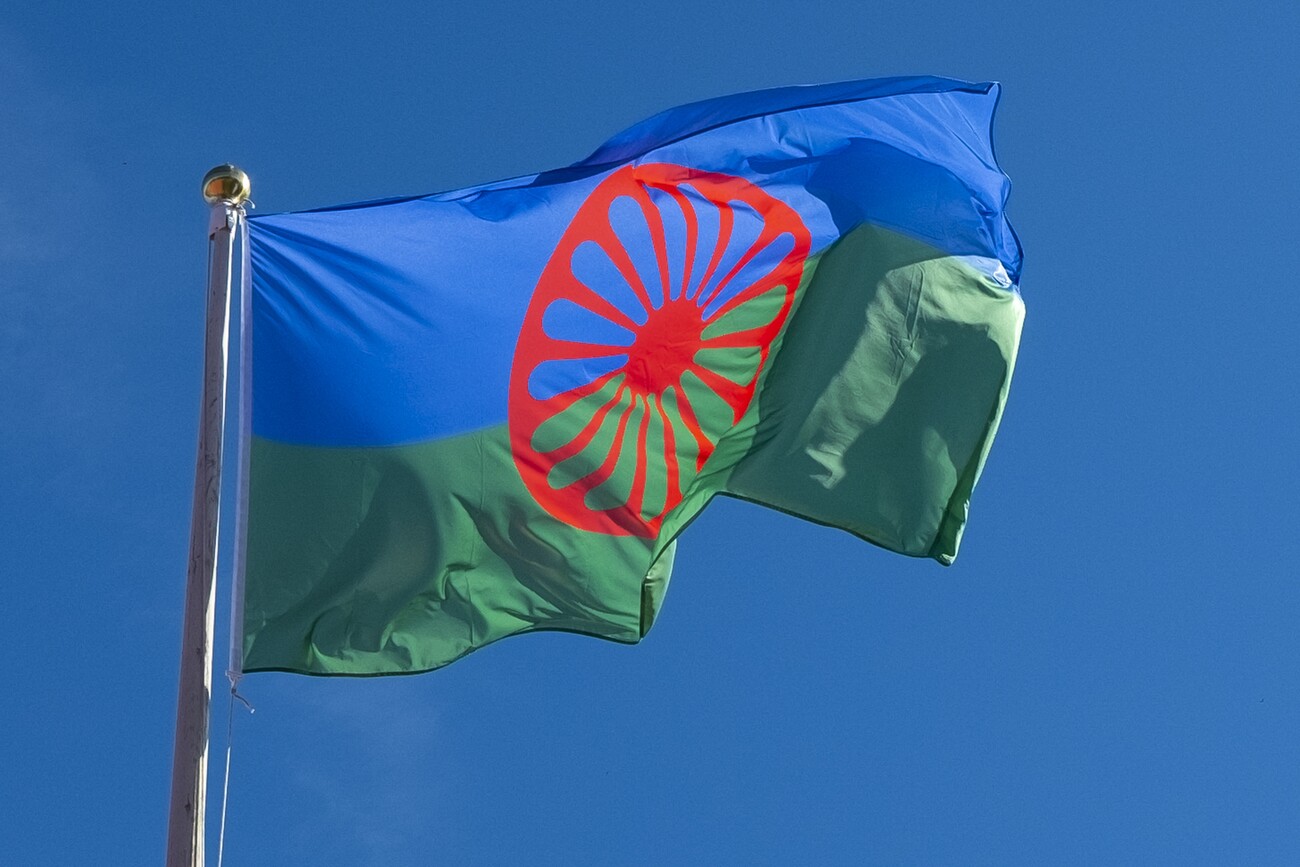
Heritage: Martin, a Slovak Roma man, explained the meaning of the Roma flag: green for the ground, blue for the sky and a wheel representing travel. “We will always be Roma.” Some participants help organise events for International Roma Day on 8 April. Michal, a Czech Roma man in his twenties, described his local event, which included food and a dance festival. Visitors, he said, “liked it very much”.
Young people: Younger participants spoke about ambitions to pursue careers in law, medicine, policing, business and beauty. Yana, a Bulgarian Roma girl, said she was using the opportunities available to her in the UK to do things that might have been less likely to come true in Bulgaria. Jana, a Slovak Roma girl, works and studies so she can give her parents “the life they deserve”.
Roma Support Group’s own history is another example of what community-led work can achieve.
Mihai said “we have been there for over 65,000 Roma people in 28 years of activity” is what makes the charity proud. He described one moment of particular pride from 2004, when, he said, more than 2,700 families, mostly Roma, received letters from the Home Office telling them they had less than two weeks to arrange new documents or leave the UK.
He said Roma Support Group worked individually with more than 500 families over those two weeks and helped overturn the policy.
The organisation is also proud of the more than 100 Roma people who have worked or collaborated on its projects over the years, contributing to their own professional development, and of its support for the development of new Roma initiatives across the UK.
Mihai also spoke about his personal pride. “I am very proud each time I manage to bring Roma people together at the same table to either discuss amongst themselves or raise shared concerns with decision makers,” he said. He highlighted the Mishto Campaign, which he described as the first Roma-specific campaign in the UK. It calls for fairer services for Roma people in schools, charities and local authorities.
Why many Roma people still feel unable to speak openly
The report’s positive stories sit alongside difficult experiences that cannot be ignored. For many Roma people, pride in their identity exists alongside a fear of discrimination, judgement and being treated differently.
Karolina, a Polish Roma participant in a focus group, said: “I’ve never, ever said I’m Roma... because I’m scared.”
Alina, a Romanian Roma girl aged 14 to 19, said: “I’m still sometimes afraid to tell people who I actually am.”
Stefan, a Romanian Roma key informant from the voluntary sector, explained that counting has historically been associated with danger. In the community’s memory, Stefan said, something terrible has tended to follow a count. So whenever someone wants to count Roma people, “this is bad news”. The report links this fear to the historical misuse of this kind of data in other countries.
Mihai said the fear has deep roots. “Prejudice, stereotype and discrimination against Roma continues to be high,” he said. Trauma from past personal or family experiences, alongside the fear of being judged or targeted, still makes people hesitate to identify as Roma. He also pointed to research by the charity Protection Approaches, which found that 41 per cent of people surveyed believed Gypsies, Roma and Travellers posed a slight or major threat to Britain’s success and prosperity.
For people to feel safe, Mihai said, society and its institutions “must acknowledge the centuries of negative treatment or ignorance towards Roma and work towards building trust with the Roma community”. That means creating more job opportunities, celebrating Roma culture and heritage, and ensuring schools provide good-quality education for everyone. That, he said, “would create the environment for Roma to feel safe to confirm their ethnic identity”.
An ONS spokesperson said: “We understand that some people may be nervous to disclose their ethnicity. We are legally required to protect respondents’ confidentiality and keep their information secure. We anonymise all information before publishing statistics, so no personal details are released.” ONS also says the information Roma people provide can help communities, policymakers and service providers better understand their needs.
The report also explores assumptions about what it means to be Roma. Ana, a Romanian Roma woman in her thirties, said some people assume Roma must live in tents or caravans. “No, still I am Roma, but I had other opportunities.” Educated Roma people, she said, can be told they have stopped being Roma. Many Gypsy and Traveller readers will recognise the experience of having their identity questioned because they do not fit someone else’s expectations.
If people feel unable to say who they are, they risk being left out of the figures – and the services planned around them.
Mihai described the Census figure of more than 100,000 as “encouraging to see”, “with very little done to make people aware of the census and encourage them to tick the Roma box”. He said the new report “complements very well” the Census data, and “presents some very specific experiences such as interaction with local community facilities or social services”.
What Roma communities want to see change
The report also sets out what participants believe would make a difference to their everyday lives.
Training for services, led by the community: Adriana, a Romanian Roma key informant, said professionals need to “help them understand more about us”. Key informants suggested this training should begin early, while people are still students.
More Roma representation in public institutions: Elena, a Romanian Roma woman in her thirties who worked in a school, invited Roma parents to a meeting. Most attended, including some who had previously had little contact with the school.
Better access to digital and language support: Claudiu, a Romanian Roma participant in a focus group, said his father, who never learned to read or write, finds booking appointments by phone very difficult and should be able to book at reception instead.
A National Roma Strategy: Key informants described the need for a long-term, government-led approach, similar to the strategies EU member states are expected to have.
The report also looks closely at the role of interpreters. Bartosz, a Polish Roma participant in a focus group, described being 13 or 14 and having to take their parents to the doctor and explain everything to the GP. “You didn’t know the terms which were being used.”
The report says many adults rely on their children to translate, sometimes at the request of services, placing children in an age-inappropriate role. It also found that some participants do not trust non-Roma interpreters from their countries of origin.
Small changes in representation can also make a lasting difference. Ana described a university tutor who included a positive Roma character in a case study. She found it “powerful”. Small things like that, she said, matter.
Asked what councils, schools or GPs could change tomorrow, Mihai’s answer was simple: read the report. “I would strongly encourage councils, schools or GPs, especially those in areas with known presence of Roma communities, to read this ONS report to get a good understanding of who their local Roma communities are,” he said. They should then look at the Mishto Campaign for practical steps.
ONS says participants repeatedly highlighted community engagement as a way to improve participation among Roma people. It says it worked with dedicated community engagement staff ahead of the last census. “We anticipate doing the same for Census 2031, informed by the insights from 2021 and this research,” an ONS spokesperson said.
What happens next?
ONS says no further research focused specifically on Roma people is currently planned. The work forms part of a wider programme, recommended by a UK Statistics Authority Taskforce, exploring the lived experiences of groups under-represented in UK data, including Gypsies and Travellers. “We are now actively considering how the findings can be used to improve statistics moving forward,” an ONS spokesperson said.
Mihai would like to see future research explore the contribution Roma people make to the UK economy. “Thousands of Roma people are working all across the UK in factories, construction, farming and more,” he said. Research involving businesses that employ Roma people, speaking about the impact Roma migrants have on local, regional and national economies, “would be helpful”.
The report is an important step towards better understanding Roma lives in England and Wales. But its most powerful message may be found in the people behind the findings: young people with ambitions for the future, parents determined to give their children better opportunities, and community organisations that have spent decades supporting families, developing new leaders and bringing people together.
Roma people have always had their own voices, knowledge and stories. The challenge now is to make sure institutions listen, recognise the strength already within these communities, and turn what they have heard into meaningful action.
Read the report here: Lived experiences of Roma people in England and Wales: 2025.
If you would like to share your own experience, or if your organisation was involved in the research, get in touch with Travellers Times at editorial@travellerstimes.org.uk
Shannon Casey for Travellers Times
Last updated: 24/11/2026. Feature image Image by Mikael Good via Pixabay. Quotes from participants are taken from the ONS report, which uses pseudonyms. Quotes from ONS and Roma Support Group were supplied for this article.
Related reading: Massive rise in ‘Gypsy or Traveller’ university students largely driven by Roma