'The government money is there for new Traveller sites but councils aren’t using it’

Lack of councils applying for government funding to build new socially rented Traveller sites branded a DISGRACE by campaigners. Read our Travellers Times special investigation to find out more.
As the new government multi-billion-pound fund for social and affordable housing opens for bids, an investigation by the Travellers Times can reveal that only eight councils bid for funding to build socially rented Traveller pitches in the previous fund that ran from 2016-2023.
The Affordable Homes Programme was launched by the government in 2016 and ran for seven years until 2023. Its aim was to increase the number of new socially rented and affordable homes by providing ring-fenced funding to local authorities, housing associations and commercial house builders. Eventually £6.6bn funding was granted to build new affordable housing in England, with a further £4.8bn earmarked for London, to be run separately by the Greater London Authority.
Using freedom of information laws targeted at Homes England, the government body that ran the previous Affordable Housing Programme and which now runs the new £39bn Social and Affordable Housing Programme, we can also reveal that for the seven years between 2016 and 2023:
- Eight councils and housing associations working with councils successfully bid for a total of ten schemes that delivered a total of 108 pitches.
- The amount of money awarded to councils and housing associations to build new Traveller pitches came to a total of £7.1m – which is just over 0.1% of the total awarded to all housing schemes.
- According to a previous 2021 information request by the charity Friends, Families and Travellers, at least 30 of the new 108 pitches were transit pitches built in Cornwall and Birmingham.
- There were no unsuccessful bids for new Traveller sites or pitches through Homes England.
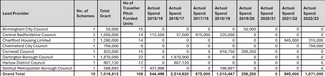
That there were no unsuccessful bids tells us that the vast majority of English councils did not even bother to address the national shortage of Traveller pitches by applying for ring-fenced government funding, even though doing so would not affect their local resident’s council tax bills.
Were Homes England reluctant to give out money for Traveller sites? Was the bidding process weighted against councils applying for funding for new Traveller pitches, so many didn't apply? Did the councils not want Traveller sites? The Travellers Times decided to delve into one of the successful bids to try to find out the answers to these questions..
We picked a successful bid to build seven new pitches on a Traveller site called Gables Close in Solihull. Gables Close is now a fully refurbished socially rented 19 plot Gypsy and Traveller site in the West Midlands, and is within the remit of Solihull Metropolitan Borough Council. The site was picked by the Council in 2014-15 to help fulfil its legal need for more Traveller pitches in its area. The Council was already working with Rooftop Housing, a Worcestershire-based housing Association with previous form for delivering and managing Gypsy and Traveller sites on behalf of councils. In 2015/16, acting on behalf of the Council, Rooftop successfully bid for just over £600,000 from the Affordable Homes Programme run by Homes England, and then provided nearly double that itself in the form of a Rooftop Housing loan to be paid back, eventually, by rents. Rooftop now manages Gables Close for the Council.
The Travellers Times contacted Boris Worrall, CEO of Rooftop Housing, who spoke to us in a telephone interview. We asked him about the bidding process to Homes England and whether Homes England generally welcomed bids for new Traveller sites.
“There are some specific factors for developing Gypsy and Traveller sites that are different from general needs housing – specifically around planning, but it can be done if there is enough will,” said Borris Worrall, adding that councils need to step up to those challenges.
“The bidding process to the Affordable Homes Programme is no more difficult than bidding for general housing projects, and Homes England are very receptive to bids for sites – it just needs the will from (councils) to find land for sites, work through the planning process, and then apply,” said Boris Worrall.
“It’s about understanding the needs that Gypsy and Traveller communities have and engaging with them. There’s nothing wrong with the bidding process and the money is there,” he added.
“There are specific hurdles around planning, the financial profile of these sites, design of these sites and then how you manage them, but there clearly is a need and councils should lean into this – after all the money is there to be used.”
The Travellers Times also spoke to West Midlands Romany Gypsy campaigner Abeline McShane, who was heavily involved in pressing Solihull Metropolitan Borough Council to meet its Gypsy and Traveller accommodation needs, particularly by expanding and refurbishing Gables Close.
Abeline McShane explains to us over the phone how she was involved in helping to design the new “sheds” (day rooms specifically for washing, laundry and sometimes cooking which normally sit beside a mobile home or trailer) on the site and had also worked with Solihull MBC’s former CEO to help get the site planned.
“We have disabled and elderly people here on the site, one of the sheds is specifically built for a disabled person. There are also families – it’s a nice site to live on,” says Abeline McShane.
We ask Abeline McShane the million-dollar question. If – as Rooftop’s Borris Worral says – the government money is there and available and Homes England are receptive to bids for funding for Traveller sites – then why did the vast majority of councils not take advantage of it?
“The councils do not want to build Traveller sites,” is Abeline’s simple straightforward answer.
“They know that the money is there. I have been pointing out that the government has funding for Traveller sites to all the councils in the West Midlands, but the councils don’t want to build sites,” explains Abeline.
“Solihull is an exception and we had to get the British Red Cross involved to help persuade the council of the need for accommodation, particularly for local elderly and disabled Travellers,” she adds.
Abeline explains that the attitude to planning for and then building local authority-run Traveller sites is exemplified by Birmingham City Council.
“It’s a disgrace,” says Abeline. “Birmingham is the 2nd biggest city in England but does not have a single council-run rented Traveller plot for Gypsies and Travellers to live on – not one at all.
(By contrast in London – whilst certainly not overpopulated with Traveller sites – most London borough councils have at least one public authority Traveller site, although even in London no new public authority Traveller site has been built since 1996 and two have been closed.)
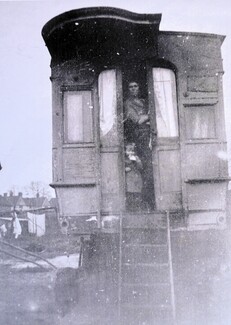
Abeline explains that this is regardless that Birmingham has a rich heritage of having Gypsy and Traveller people living and working there – Charlie Chaplin is said to have been born in wagon in the Black Patch, which was a historic Romany Gypsy camp in the city.
“In 1907 the last 300 Romany Gypsies were evicted by the Birmingham authorities from the Black Patch” says Abeline.
“Nothing has really changed in Birmingham for Gypsies and Travellers since then. The attitude of the Birmingham authorities has been ‘move them - on shift them on’ for over a hundred years and counting. It’s a disgrace,” adds Abeline.
“All the 2nd largest city in England has is just a few transit pitches on an old car park that are not fit for purpose and that are not used,” explains Abeline, adding that she believes that the transit site is what she calls a ‘fake one’ – which means that its main purpose is to allow police to use their “section 62” powers that allow them to swiftly evict unauthorised Traveller camps by ordering them to either decamp to a legal transit site or leave the area – or face criminal charges.
If what Abeline says is true about 'fake transit sites' – then ironically the Birmingham 15-pitch transit site was built at least partially using funding from the Affordable Homes Programme. In 2019/20, according to the Homes England freedom of information response, Birmingham City Council received £50,000 from Homes England to build 15 pitches, which, as a previous freedom of information response to the charity Friends, Families and Travellers revealed, were transit pitches.
So how big is the problem of the shortage of socially rented Traveller pitches - and how many Romany Gypsies and Travellers live on sites these days?
That councils need to step up and up its supply of socially rented Gypsy and Traveller sites - regardless of the “challenges” they often face , is confirmed by the 2021 Census which found that Gypsies and Travellers rely on social housing at more than twice the average rate (44 per cent), compared with all ethnic groups (17 per cent). The Census was answered by just over 70,000 people who self-identified as Gypsy or Traveller.
Many Romany Gypsies in England and Wales live in ‘bricks and mortar’ housing and not on Traveller sites (figures vary – the Census found that 22% of respondents identifying as Gypsy or Traveller lived in ‘mobile dwellings’ which would include mobile homes on Traveller sites, but regional statistics, such as in Cambridgeshire can put the percentage as high as 40%. It also remains that under both UK and international law, Romany Gypsies and Travellers have a right to live in ‘appropriate cultural accommodation’ (ie caravans and trailers) if they wish to do so. It is also important to remember that some Gypsies and Travellers may be living in ‘bricks and mortar’ because there is no other choice – as research by the charity London Gypsies and Travellers highlights.
Probably the most reliable statistics out there on this issue – in England at least - is the biannual government ‘Gypsy and Traveller Caravan Count’ which is overseen by the government but carried out by local councils who – literally – send people round to count all the caravans on known local Gypsy and Traveller sites, both private and council and both legal and ‘unauthorised’. They do not count Gypsies and Travellers living in housing - just the number of caravans and mobile homes on known Gypsy and Traveller sites and camps.
According to the he latest 2025 government Gypsy and Traveller Caravan count the total number of Traveller caravans in England on the count date in July 2025 was 28,589 – a small but significant increase of 4% on 2024.
According to the Caravan Count 2025 report’s authors, the growth in number of caravans since the July 2024 count has been led mainly by a rise in the number of caravans on private sites (with permanent planning permission) which has resulted in an increase in the total authorised caravans, despite a decrease in caravans on socially rented sites.
So the numbers of Gypsy and Travellers living in ‘culturally appropriate accommodation’ (we can treble the number of caravans to get a rough idea of how many actual people that means - approx 80,000) is gradually increasing, with Gypsy and Traveller families and individuals who are developing and building their own sites leading the way – but socially rented sites are not yet part of the solution to the Gypsy and Traveller accommodation crisis, and these are needed because not everyone can afford to develop their own site, which, regardless of planning, land and development costs, can rack up massive legal fees as the developers often have to fight often vicious and highly resourced local campaigns trying to – and often succeeding in - stopping them.
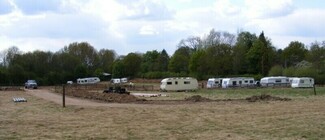
But there is a glimmer of hope that the need for more Gypsy and Traveller socially rented pitches – either council or housing association or a hybrid of both - may be increased by the new £39bn Social and Affordable Housing Programme with an uptick in applications compared to the previous Programme. Gypsy and Traveller campaigners, like Abeline McShane, will continue to plug the availability of the government funding to every council official that she meets and national Gypsy and Traveller campaign charity Friends, Families and Travellers say they have been in touch with Homes England since the new Programme was announced to ensure that funding for Traveller sites would still be available, and to also produce a webinar about the Programme and how to apply aimed at campaigners, housing associations – and council officials.
The Travellers Times approached Friends, Families and Travellers for comment about their plans.
Abbie Kirkby, Head of Public Affairs and Policy, replied in a statement:
“Decades of failure in the planning system have led to a constant undersupply of Gypsy and Traveller sites and stopping places. At the same time, too many existing sites are affected by poor conditions and long-term disrepair.
As the government looks to create new homes, it is vital that Gypsies and Travellers are included in any plans. The new Social and Affordable Homes funding represents an important opportunity to begin tackling this long-standing crisis.
To make a real difference, the fund must meaningfully support the delivery of new, well-designed and well-located Gypsy and Traveller sites. Friends, Families and Travellers is working with Homes England to promote the new fund and encourage councils and housing providers to bring forward strong applications for Gypsy and Traveller sites.”
Mike Doherty for Travellers Times News
(Lead stock photo: Appleby 2024 by Eszter Halasi)
To find out more about the 2026-2036 Social and Affordable Home Programme visit: Social and Affordable Homes Programme (SAHP) 2026 to 2036 - GOV.UK
In the course of this investigation the Travellers Times contacted Solihull Metropolitan Borough Council and Chelmsford City Council (another council that successfully bid to build a new Traveller site). Solihull MBC did not reply and Chelmsford CC sent us this as background:
"These pitches were built to meet an identified need in our Gypsy and Traveller Accommodation Assessment, and we commissioned CHP (a local housing association) to submit the bid to the Affordable Homes Fund on Chelmsford City Council's behalf. CHP were also commissioned by the council to build and manage the development, so they are better placed to comment on the build process and answer any questions about site management."
By that time we were already in touch with Abeline McShane and then Rooftop's Boris Worrall.
The Travellers Times also contacted the Ministry of Housing Communities and Local Government (under whom Homes England sit) with questions and were provided with the following background, but no statement:
- We have confirmed a new 10-year £39 billion Social and Affordable Homes Programme to kickstart social and affordable housebuilding at scale across the country.
- The new Social and Affordable Homes Programme allows for provision of traveller sites and pitches. Proposals for Traveller Pitches will be assessed against the SAHP assessment criteria – value for money, deliverability and strategic fit. Providers should consult Homes England and the GLA’s guidance for full details and criteria.
- Bidding is now open to Homes England and the GLA.
- Traveller pitches can form part of regeneration activity under the same criteria as other regeneration schemes and that these continue to be funded as Specialist and Supported housing and set out in the relevant capital funding guides.
- The priority for funding is new, permanent supply secured on sites with a freehold or long leasehold basis. We recognise that, in some areas, the needs of the local traveller communities might best be met through other forms of provision such as transit sites. It is expected that any pitch provision funded will meet the identified need of travellers for the local authority in question, and that all sites will have full and long-term planning permission, regardless of the length of stay of the people.
The Travellers Times also spoke to a regional Gypsy and Traveller charity who were researching whether bids could be made to the SAHP to fund the refurbishment of already existing Traveller sites. The charity kindly let us see the reply from an SAHP official which basically said, yes, maybe but it needs to add extra pitches to the site as well:
"Regeneration and replacement of existing traveller sites / pitches will be permissible under the SAHP where additionality can be demonstrated. This could mean adding additional pitches as part of a site regeneration or replacing moribund existing pitches which are no longer fit-for-purpose.
It would also depend on the level of works required. We would not expect to fund refurbishment or small-scale upgrades to existing pitches, but remodelling of a site would be ok provided it also leads to an overall increase in the number of homes being provided.
There is a relevant section on regeneration in the funding guidance with more detail (not specific to traveller pitches).
For full guidance on applying for SAHP funding, including eligibility criteria and programme requirements, please visit:
https://www.gov.uk/guidance/apply-for-affordable-housing-funding
We kindly ask that you review the guidance and let us know if there are any areas where you would like further clarification. Once you have done so, we would be happy to connect you with the local team for more tailored advice and support. Also if you wish to discuss a specific site proposal, please let us know."