Southampton University to remember New Forest Romany 'rehabilitation compound' for Holocaust Memorial Day
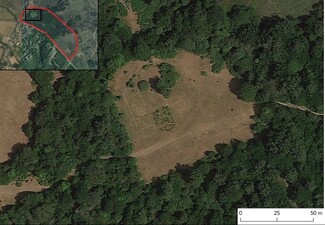
Tuesday 27th January: FREE EVENT at Southampton University - also live streamed online - to explore the persecution of Romanies in the UK and Europe will also delve into the history of the controversial New Forest 'Gypsy Rehabilitation Camp' to mark Holocaust Memorial Day.
The event takes place at 6pm in the Sir James Matthews Building, Southampton. More information and tickets are available via Eventbrite.
Romany heritage and persecution in the UK and across Europe will be remembered at an event to mark Holocaust Memorial Day in Southampton on Tuesday 27 January.
The event, organised by the University of Southampton’s Parkes Institute for the study of Jewish/non-Jewish relations, will feature an award-winning exhibition on Romany history in the New Forest co-curated by History student Kye Preston – himself of Romany descent.
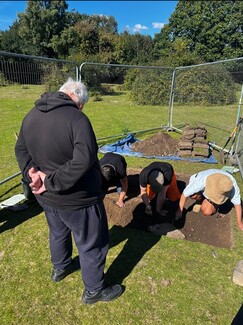
Kye, 21, worked on an archaeological dig at the site of the largest of seven Gypsy compounds in the New Forest, at Thorney Hill near Bransgore. The compound was once home to his great grandparents.
VIDEO ABOVE: In 2024, Romani Community Archaeology held a dig at the 'Gypsy Rehabilitation Centre at Thorney Hill in the New Forest - the first of its kind for a Romany/Traveller place of historical interest in the UK.
“It was an assimilation project,” said Kye. “It’s hard to use that term because it had never been called that before. But it was cultural erasure."
The Thorney Hill compound was designed in 1926 and had about 400 inhabitants at a time.
Kye, whose relatives lived nomadically in the New Forest, explained: “The dig revealed more about what happened at Thorney Hill. It came to light that the compound became, in the 1960s, what the council called a Gypsy Rehabilitation Centre.”
This rehabilitation centre consisted of second-hand prefabricated houses built on the compound and called The Close. Tents and caravans were no longer allowed.
“It was an assimilation project,” said Kye. “It’s hard to use that term because it had never been called that before. But it was cultural erasure.
“Whilst The Close provided crucial access to a previously unavailable quality of life, including adequate sanitation and facilities, it also meant that many families had to leave nomadic culture behind in order to gain full access to these amenities.”
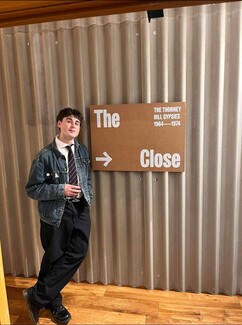
Along with Romani Community Archaeology and the New Forest Heritage Centre, Kye has co-curated an exhibition about the site and what was revealed by the dig.
“We found bits of pottery, parts of children’s toys, the remains of the sewerage system, even a fragment of a vinyl record,” said Kye.
His personal connection to the site and its history has also driven him to write his final year dissertation on Thorney Hill.
“My great grandparents were born out in the forest at Thorney Hill,” said Kye. “By the time they were in their early 20s, in the 1960s, they had moved into a council house, where they still live today.
“It was very moving and meant a lot to be excavating at a site where my family once lived. It has also opened up doors to the community to talk about what happened.”
He added: “This project has given me, someone from a Romany background, the chance to articulate my own family history that will otherwise be lost. It has also put Romany history back into the hands of Romany people.”
The exhibition, called The Close, won the Touchstone Intangible Heritage Award at the national Association of Heritage Interpretation awards in 2025.
The Southampton Holocaust Memorial Day 2026 event will also feature a lecture from Professor Celia Donert, from the University of Cambridge, on ‘The Romani Holocaust. An Unfinished History’.
The event takes place at 6pm on Tuesday 27 January, in the Sir James Matthews Building, Southampton. More information and tickets are available via Eventbrite.
Southampton University press release/TT News
(Lead image: ‘Aerial view of The Close’: Bird eye view of the former site of The Close. Credit: Kye Preston)