'Revolution!' - Hope rises for the 'wounded souls' of Hungary's Roma
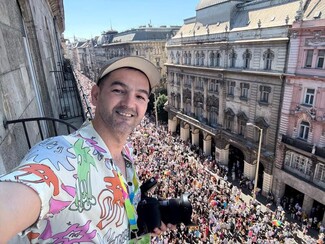
“When I saw those young Gypsy faces in the Hungarian Parliament - the faces of the Roma boys - I cried,” says Béla Váradi. “You never see Gypsy people as something positive in Hungarian politics or media before – we are brushed under the carpet all the time, and now we are visible.”
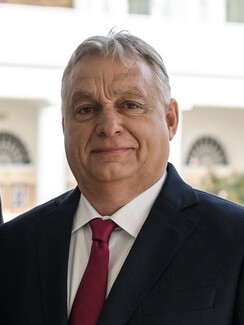
Béla Váradi, a Hungarian Roma photojournalist based in the UK, is talking about the performance by the Roma and non-Roma boys of the Sugo Tambura band at the inauguration of the new TISZA led Hungarian Government on May 9th, earlier this year, which finally ended the autocratic rule of the former Prime Minister Viktor Orbán.
For Váradi, the landslide TISZA victory over the previous ruling Fidesz party was a “revolution” for Hungary.
Some revolutions have taken years, even decades, to come to fruition — but the recent Hungarian parliamentary “revolution” took just two. The instigator and leader of this revolution was Péter Magyar, a lawyer by trade. Led by Magyar, the newly formed TISZA political party came from virtually nowhere and, in just over two years, ended the 16‑year rule of the Fidesz party, led by self‑described “illiberal democrat” former Prime Minister Orbán — an autocratic ruler admired by U.S. President Donald Trump and his MAGA Republicans, as well as by leaders of many right and far‑right parties in Europe, including Reform’s Nigel Farage. U.S. Vice President JD Vance even took the time to visit Hungary during the election campaign to show his support for the incumbent Hungarian Prime Minister. Hungary is a country roughly a quarter of Spain’s size by land area, with a population comparable to that of Greater London.
The abrupt ending of Orbán’s 16‑year Fidesz regime — and, unlike Donald Trump, Orbán accepted the democratic defeat once it became clear Fidesz had lost — after their own landslide victory in the previous parliamentary elections in 2022 could have profound effects on the lives of Hungarian Roma, who make up roughly 8–10% of the country’s population.
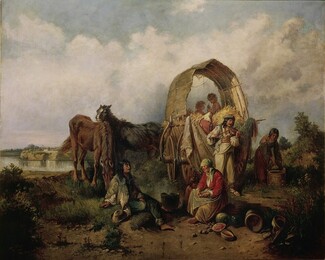
Roma, who, like all Romani people spread across the globe, originally migrated from Northern India in the 10th-12th century, and may have reached Hungary by the 15th Century as the Byzantium Empire collapsed after being conquered by the Ottoman Turks, although some Roma historians say Roma were present and settled in Hungary before then. Today, the official census, last made in 2011, states that Roma make up just over 3% of the Hungarian population, but this is a massive undercount and estimates by the European Commission and from collating other Hungarian official statistics suggest that the number of Roma could be nearer 800,000, out of a total population of nearly ten million.
So, what was it like for Roma under Orbán, what part did they play in his downfall, and what do Hungarian political activists want to see a new TISZA Government do to heal what one Hungarian Roma political activist calls the “wounded souls” of the Hungarian Roma? The Travellers Times spoke to a number of Hungarian Roma political activists – all of whom supported TISZA – to find out more.
Aladàr Horvàth, President of the Hungarian Roma Parliament-Civil Rights Movement, who lives in Budapest, Hungary’s capital city with a population of nearly two million (one fifth of the total Hungarian population), who campaigned for Magyar’s TISZA, was also “moved” by the performance of the Sugo Tambura band.
“They played a folk song that has come to be regarded as a Hungarian Roma anthem, alongside a Hungarian folk song frequently heard during the Tisza campaign, and their performance was deeply moving,” says Horvàth, who was a former politician before Orbán came to power.
“Many of the representatives (in Parliament), as well as the guests and those watching on screen, were in tears,” adds Horvàth.
“The Roma in Hungary experienced this gesture as an admission through the gates of the republic. Many of us also interpreted it as a public apology and a bow of respect from the new
government to the children who were abused and raped while in state care under the previous regime, a large proportion of who are Roma.”
The child abuse scandal that Horvàth is referring to erupted last year in 2025 when Hungary was wracked with several scandals involving severe, systemic abuse and neglect in state-run children’s homes. According to a report by the European Roma Rights Centre (ERRC), multiple investigations and reports showed a litany of physical, sexual, verbal, and emotional violence affecting many vulnerable children in care. Although there are no national disaggregated data in these cases, Romani children are significantly overrepresented in Hungary’s child welfare system, making them particularly exposed to these forms of violence, say the ERRC, adding that the rumours and investigations into the abuse had been building for years.
The scandal undoubtably affected the popularity of the Fidesz Government as the 2026 elections loomed. In December 2025 Magyar led a march of thousands of Hungarians behind a banner reading ‘Protect the Children’ in Budapest, urging Orbán to resign.
Yet even if a Roma child avoids being taken into state-care, their prospects in the Hungarian education system remain dim.
The Travellers Times spoke to Hungarian education expert Erzsébet Mohácsi, 52, a mother of two children, who describes herself as a Hungarian patriot belonging to the Lovari Roma community.
Mohácsi, who has three degrees and has been a British citizen for three years, provided the Travellers Times with a statement by email in response to our questions focussing on Hungarian Roma children and education.
Mohácsi states the authority and experience which informs her views; which are that the segregation of Roma and non-Roma children within the state education system, whilst pre-dating Orbán, had begun to improve before he swept to power in 2010 – but then the gains were reversed.
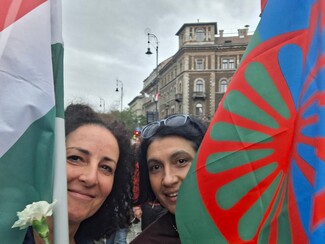
Since I was 17, I have been working in the fields of education and legal protection to improve the lives of Roma children ... Writes Erzsébet Mohácsi.
“Since I was 17, I have been working in the fields of education and legal protection to improve the lives of Roma children. I gained my experience in educational institutions, as a teacher. I was fortunate to teach both in a segregated school, where Roma students from the lower layers of society were concentrated, and in a prestigious school in the most exclusive district of Budapest, attended by upper middle-class white children.
I also worked for the Education Ministry, at that time when the Minister of Education was a liberal democrat, and my sister, Viktória Mohácsi (later a Member of the European Parliament), was entrusted with the task of integrating Roma children, as a ministerial commissioner— all before the Orbán regime.
As an expert, I participated in the development, dissemination, and monitoring of a national alternative integration program. The most significant phase of my career was undoubtedly the founding of the Chance For Children Foundation (CFCF), of which I became the head in 2003, when, with the involvement of lawyers, legal experts, sociologists, and economists, we created our strategy to end school segregation of Roma children in Hungary by legal challenges.
In 2005, we began suing schools, (using the) new Anti-Discrimination Act, (and) by 2012, we had launched about 40 legal challenges, all of which we won. (The result was that) Schools had to be closed and Roma students had to be integrated into normal institutions in cities. About 3,000 Roma students were directly affected.
Then, in 2010, when Orbán came to power, this trend began to be reversed .. Continues Erzsébet Mohácsi. The laws were rewritten, the minister interfered in our affairs, even to the extent of appearing at a court case against segragation we were running, telling the judge what sentence he had to make.
It was also enacted into law that churches are allowed to maintain segregated Roma schools, and that the minister can grant exemption to segregated schools.
The Roma schools that were closed after the successful lawsuits of the CFCF were practically restarted, renamed as ’catch-up education’, while integration programs were stopped.
The number of Roma schools began to grow rapidly until Orbán returned to power in 2010. While before the Orbán regime a third of Roma children studied in segregated schools, today, according to some estimates (no recent sociological survey has been made), about two-thirds of Roma students study segregated.
I gained my experience in educational institutions, as a teacher. I was fortunate to teach both in a segregated school, where Roma students from the lower layers of society were concentrated, and in a prestigious school in the most exclusive district of Budapest, attended by upper middle-class white children.
I also worked for the Education Ministry, at that time when the Minister of Education was a liberal democrat, and my sister, Viktória Mohácsi (later a Member of the European Parliament), was entrusted with the task of integrating Roma children, as a ministerial commissioner— all before the Orbán regime.
As an expert, I participated in the development, dissemination, and monitoring of a national alternative integration program. The most significant phase of my career was undoubtedly the founding of the Chance For Children Foundation (CFCF), of which I became the head in 2003, when, with the involvement of lawyers, legal experts, sociologists, and economists, we created our strategy to end school segregation of Roma children in Hungary by legal challenges.
In 2005, we began suing schools, (using the) new Anti-Discrimination Act, (and) by 2012, we had launched about 40 legal challenges, all of which we won. (The result was that) Schools had to be closed and Roma students had to be integrated into normal institutions in cities. About 3000 Roma students were directly affected.
Then, in 2010, when Orbán came to power, this trend began to be reversed. The laws were rewritten, the minister interfered in our affairs, even to the extent of appearing at a court case against segragation we were running, telling the judge what sentence he had to make.
It was also enacted into law that churches are allowed to maintain segregated Roma schools, and that the minister can grant exemption to segregated schools.
The Roma schools that were closed after the successful lawsuits of the CFCF were practically restarted, renamed as ’catch-up education’, while integration programs were stopped.
The number of Roma schools began to grow rapidly untill Orbán returned to power in 2010. While before the Orbán regime a third of Roma children studied in segregated schools, today, according to some estimates (no recent sociological survey has been made), about two-thirds of Roma students study segregated.
Throughout his 2-year’s (as TISZA leader), Péter Magyar openly opposed the racist incitement of the Orbán government and condemned educational segregation.
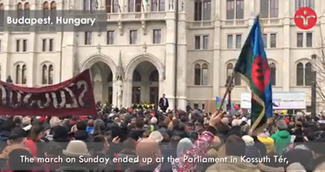
Racist social care for Roma children and segrgated education policies and the rolling back of hard-won legal protections by Roma activists, weren’t the only way Fidesz opressed – or increased the opression – of Hungarian Roma.
Speaking to the Travellers Times, Bernard Rorke, from the European Roma Rights Centre (ERRC), which used to be based in Budapest until they moved to Belgium in 2019 after 24 years of operation, outlines some of the antigypsism policies and rhetoric of the Orbán regime:
For 16 years while the Orbán regime was fond of repeatedly declaring that nobody had ever done so much for Roma, the reality was one of exploitative public works schemes, swingeing welfare cuts, racist policing and persistent school segregation, all delivered by a regime that regularly indulged in disparaging and racist rhetoric and maintained discriminatory structures at the points of access and delivery of public services for Roma ... Writes Bernard Rorke.
In July 2025, the regime passed the Law on the Protection of Local Identity which provided a legal framework for racial segregation and allowed for the drafting of municipal decrees that systematically exclude Roma from taking up residence in towns and villages across Hungary. This was nothing less than apartheid by stealth.
As for the rights of the child, less than a month after the European Court of Human Rights (ECtHR) ruled against Hungary for wrongfully removing a new-born from its Romani mother, in 2025, the Orbán regime doubled down and introduced a new amendment to the child protection law, enabling the authorities to decide on removal even before a child is born.
Orbán, who frequently spoke of the need to preserve ethnic homogeneity and often regurgitated the ‘great replacement’ theory, to argue that Europeans should not become people of 'mixed race' in his tirades against migrants and refugees, regularly disparaged Hungarian Roma. He described Hungarian Roma as a ‘historically inherited burden’, referred to them as internal migrants, and following a court case on school segregation in 2020, made the move favoured by white supremacists and nativists worldwide by portraying the ethnic majority as the victims.
Orbán said:
Lest there be any doubt about the depth of anti-Roma racism from on high, during the election campaign, one of Orbán’s henchmen, János Lázár, said there was no need for migrants as long as there was a reserve of Hungarian Roma to clean Hungary’s “shit-stained toilets”:
Lázár said:
This statement by Lázár, Hungarian Minister of Construction and Transport in January 2026, was obviously aimed at his idea of the Hungarian ethnic majority - and was talking about the Roma minority - not to them. It did not go down well when it was disseminated away from Lázár’ intended audience and spread across Roma and pro-Roma Hungarian social media and news services.
For many Hungarians, a defining moment signalling that Fidesz was haemorrhaging support to Magyar’s TISZA — and that the Orbán era was finally wobbling — came on 28 June 2025 at the Hungarian LGBT+ Pride rally in Budapest.
Pride drew an enormous crowd: at least 100,000 to 200,000 people, with some estimates pushing the figure closer to 500,000. The rally went ahead even after parliament passed legislation that triggered an initial ban. Budapest’s mayor, Gergely Karácsony, a Green politician, outmanoeuvred the ban by finding a legal loophole, clearing the way for Pride to proceed.
Roma participation was strong. Mohácsi attended and spoke at the rally, while Váradi was present both as a member of the LGBT+ community and as a professional photographer on assignment.
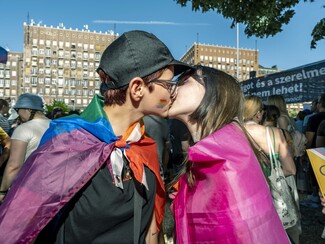
“Pride was a big step towards freedom and the political revolution,” says Váradi, explaining that this was despite the Fidesz government threatening to jail the organisers and use surveillance cameras to track who went so they could be potentially arrested and charged later. “It was a last chance to come together to say no to Orbán and yes to freedom,” says Váradi, adding that “everyone” turned out for the rally, not just the LGBT+ community.
That Hungarian Roma were taking part in the campaign to elect TISZA — joining rallies and helping to spread the party’s messaging on social media — is undeniable. Yet all the Hungarian Roma the Travellers’ Times spoke with belong to the often self‑described “educated” Roma intelligentsia and are either part of the Hungarian Roma diaspora in the UK or living in Budapest.
To a British way of thinking about social class, there is a tiny — and perhaps growing — Hungarian Roma professional middle class, made up of teachers, civil servants, creatives, political activists, and others. It is fair to say that this Roma professional middle class swung heavily behind Magyar and his campaign to unseat Orbán. Given that Roma and Sinti middle classes were virtually wiped out in Central and Eastern Europe by Nazi and Axis regimes during the Second World War, the fact that a Hungarian Roma middle class exists at all today — or indeed that any Roma communities survived — is a testament to the resilience of Roma people.
Yet the majority of Roma living in Hungary are not part of this professional middle class. Many live in and around rural settlements and towns, often in grinding poverty. Many are workless; others rely on exploitative menial or labouring jobs, or on state‑organised “workfare” programmes aimed at Roma, which many Roma campaigners describe as corrupt. Large numbers work elsewhere in Europe as migrants, sending most of their wages back to extended families in Hungary.
Before the 2026 elections results came in,it was generally belived that these Roma voted – if they voted at all – predominantly for Orbán and Fidesz, Horvàth says.
”The more educated and self-aware Roma voted for the change of regime,” says Horvàth. “In small villages with a Roma majority, (in the previous elections) they voted for Fidesz,” he added. “This is where the voters most vulnerable to the authorities live—people who can be blackmailed with public works programs, their only means of survival, or with fuel or food aid.”
WATCH BELOW: 'The Price of a Vote'. A hard hitting documentary by Hungarian investigative journalists about corruption in the Fidesz 'workfare' programme for Hungarian Roma (go to You Tube and click for English subtitles)
Some European Roma opinion formers go further and argue that the TISZA landslide marks a step-change in Roma political power as a cohesive voting block that could have implications for other Eastern and Central European countries that have large Roma minorities. Writing in the Roma Foundation for Europe website, Mensur Haliti, Vice President for Democracy and Network Development states:
“Across Europe, politicians often assume Roma don’t vote—and when they do, they vote for whoever holds power, through clientelist control, economic dependence, coercion and vote-buying. Hungary’s 2026 parliamentary election shattered that myth. Roma voters faced intense pressure, including the public works (közmunka) system functioning as economic leverage: vote “wrong,” lose your job,” Haliti continues.
“Fidesz also faced visible Roma backlash online (and) In constituencies with high Roma concentrations, turnout rose from 63.84% (2022) to 72.5% (2026)—and voting patterns shifted sharply,” he writes.
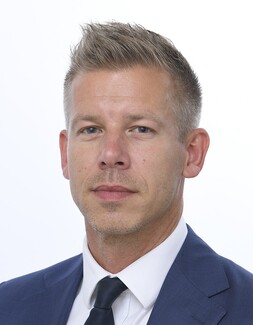
In both his first successful campaign to be elected as a Hungarian European Parliament politician and in his subsequent campaign to become Prime Minister and to sweep TISZA into power, Magyar toured rural Hungary and visited some of the most poverty-stricken Roma settlements.
According to a news report by Reuters, in the elections for the European Parliament in early 2025, Magyar visited a notoriously deprived Roma community during a nationwide campaign tour of nearly 200 towns and villages.
"No politician has done this in Hungary before," Sandor Botos, a Roma construction worker told the Reuters journalist, referring to Magyar's visit to the Hetes settlement in the town of Ozd, where hundreds of Roma still live without basic necessities such as running water.
"He showed the world how bad poverty is in these hidden villages, how many children are starving, that they are not in school," said Botos, 48, while attending a Magyar campaign rally in the town of Paszto in northeast Hungary.
According to Reuters, Botos then smiled as his young grandson Noel took a selfie with Magyar after the speech.
"They are the biggest minority, and nobody has really cared about them for 34 years," Magyar told Reuters, referring to the decades since the fall of communism in 1989.
"There are support programmes to help them, but those only reach a few towns ... but nobody has done anything to truly support them," he said.
Magyar has also repeatedly said that education is key in helping Roma communities and that he would also raise monthly cash benefits to families.
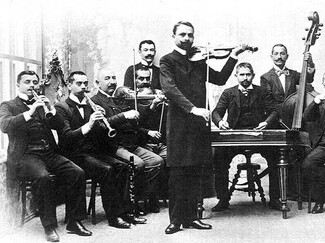
So how did the people of Sükösd — the town whose Sugo Tambura boys’ band played at Magyar’s inauguration — vote? After all, Magyar visited Sükösd during his campaign tour and later kept the promise he made there: that if TISZA won the election, he would invite the band to perform at his inauguration.
Sükösd has a population of around 3,000 people, of whom, according to census results, around 5% are Roma — although this is likely an undercount, as most official Hungarian counts of Roma are. The town — barely larger than an average English village in population terms — sits on the Southern Hungarian Plains in the sparsely populated southern part of the country and lies within the largely rural Baja district of Bács‑Kiskun, a Hungarian county with a Roma population of just over 2% according to the 2011 census (almost certainly a significant undercount). Hungarian education experts estimate that just over one in ten primary‑school children in Bács‑Kiskun are Roma — and, of course, many Roma children, around one in five, do not start primary school at all.
Although the Travellers’ Times could not find voting results for Sükösd, our research did uncover the results for the Baja constituency of which Sükösd is a part (Baja has a total of six constituencies). It voted 53% to be represented by TISZA in the Hungarian Parliament, against 39% for Fidesz, overturning 12 years of Fidesz control. From these statistics alone, it is impossible to say whether Baja’s Roma swung the vote, but at 8–10% of the potential electorate they would certainly have had an effect.
But whether the statistics suggest that it was Roma voters who “won it” is beside the point, says Eszter Halasi, a UK‑based Hungarian Roma photographer who moved to England to escape the Orbán regime and to ensure an education for her young son.
“The Hungarian people were fed up with the system — and that includes 800,000 Roma people,” says Halasi.
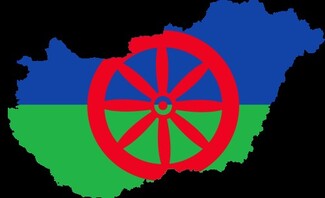
“Roma communities in Hungary became very active during the campaign period, not only in Budapest, but also in larger towns in rural areas, and what was said during the campaign in the big cities also reached even the most remote villages, because Péter Magyar travelled everywhere on foot and made it into the smallest villages too,” adds Halasi.
Halasi’s family still live in Hungary she says.
“The “TISZA islands” were self-organising local groups made up of residents during the campaign, encouraging each other to go and vote,” says Halasi.
“Where my father lives, there are many Roma people; he lives about half an hour from Budapest. A lot of Roma people live there. My father even shook hands with the TISZA Party candidate. He is very happy that the Orbán regime is being cleared out.”
Váradi has worked on assignments reporting on and photographing poverty-stricken Hungarian Roma. One of Váradi’s most shocking assignments was his investigation, published in the Guardian newspaper, into the growing commercial plasma transfusion industry, based mainly in the north-east of Hungary, that preys on poverty-stricken Roma and which rides roughshod over what little health and safety regulations there are. Put it simply – Roma are selling their plasma to these companies to make a subsistence living at a rate that destroys their health. Váradi says he has evidence that links some of these commercial plasma transfusion companies directly to the Orbán regime.
Váradi offers some insights on the potential Roma contribution to the TISZA landslide.
“The rural Roma are uneducated, but they are not stupid and they know where their interests lie,” says Váradi.
“The economy was going down, there were no jobs, no opportunities, so they voted for change,” adds Váradi explaining that even poverty-stricken Roma have some access to smart phones and use social media.
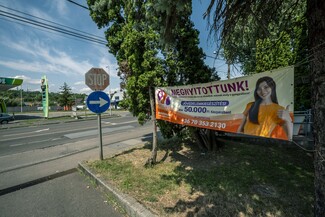
This means that Magyar’s social media messaging — and its dissemination by Roma political activists such as Horváth — would have reached rural Roma both through social media and through Magyar’s and TISZA’s volunteer‑led rural campaign. No doubt Botos, the Roma construction worker whose grandson Noel took a selfie with Magyar during a TISZA campaign visit reported on by Reuters, went on to share his positive experience on social media with his own network of family and friends.
So, what happens now that Magyar’s carefully built voter coalition — which undoubtedly includes Hungarian Roma — has succeeded in sweeping TISZA to power? What will Magyar do to hold that coalition together, and what will be offered to keep Hungarian Roma — both intellectuals and rural communities — on board? After all, there will be another election in four years’ time, which TISZA will want to win. How will Magyar keep Roma within that coalition, and how will he navigate the tension between supporting Roma and dealing with a public that has been fed a diet of antigypsyism that long pre‑dates the Orbán regime, but was sharply intensified by racist Fidesz political rhetoric — rhetoric that aligned with the racist representations of Roma in Hungary’s largely Orbán‑controlled mainstream media?

There have been some positive indications already that have built on the performance of the Sugo Tambura band at Magyar’s inauguration; there are four TISZA Roma parliamentarians in place, and the new TISZA Education and Children Minister, Judit Lannert, has indicated that the days of a racist segregated education system are over.
For Mohácsi ending school segregation this is the most urgent move that TISZA should should make.
“What is the biggest guarantee for us in solving school segregation problems is the appointed Minister of Education, who is an education researcher, and in numerous studies explains, by presenting model programs from England and other countries, how the educational success of disadvantaged and Roma students is related to integrated education,” says Mohácsi.
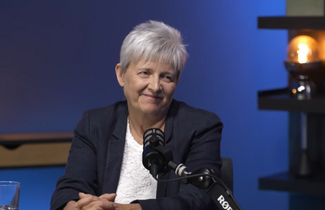
Horvàth’s Parliament – Civil Rights Movement has published a Roma Charter Freedom and Respect – Program Theses for the Roma Following the System Change, drawing on the expertise of forty socially critical Roma intellectuals, which contains 109 points outlining their recommendations to the new legislature, government, and society.
Horvàth provided this statement for the Travellers Times summing up that document:
The basic premise is what Péter Magyar articulated on the opening day: the state should treat our community of nearly one million people as Hungarian citizens with equal dignity and rights—and consequently, equal obligations (...) Writes Horvàth. Half of whom are of school age. It should turn toward Roma emancipation and civic integration as a genuine resource and a guarantee of sustainable Hungarian development. At the same time, we must recognize that Hungarian society lived “only” 16 years in a repressive, exploitative, and spiritually crippling situation as quasi-Gypsies, whereas this has been a centuries-long experience in the life of our community. A series of measures to heal wounded souls will be necessary.
The mafia regime has excluded non-pro-government, non-educated Roma from society. This had one advantage: we are more familiar with the feudal system of masters and servants. The Roma’s knowledge is therefore liberating knowledge; the entire country needs this knowledge.
We must return to the republican model governed by European constitutional institutions. In which the state’s responsibility to create and guarantee equal rights and opportunities for the Roma must be enshrined.
We must embark on an upward trajectory of economic and social progress. We must overhaul the entire local government and school system so that schools offering high school diplomas and university degrees become accessible to large numbers of Roma students. It is imperative to establish and ensure the operation of Roma national institutions, such as theatres, arts centres, museums, and archives.

ERRC’s Rorke notes, that in his election victory speech, Magyar promised "a more humane Hungary".
“After 16 years of state capture, corruption and nativism, much needs to be done to restore democracy, but much more to combat anti-Roma racism, which has a far longer history,” says Rorke, adding that the signs are encouraging, especially in the area of child protection, and the restoration of the rule of law.
“What is needed is concrete targets and timelines to end school segregation, dismantle institutional discrimination in public services and policing, and tackle the extreme poverty caused by racist exclusion,” continues Rorke.
“The government must create the conditions necessary for the effective exercise of fundamental rights by all citizens regardless of ethnicity. For the first time after 16 years, all of this seems possible.”
For Váradi, the “revolution” has already happened, symbolised by the performance of the Sugo Tambura band in the Hungarian Parliament. But turning around decades — centuries even — of oppression of Hungarian Roma will not happen overnight.
“It will take time. There is a lot to do,” says Váradi.
By Mike Doherty for the Travellers Times
(Lead photograph: Béla Váradi at the 2025 Pride rally in Budapest that Fidesz tried to ban (c) Béla Váradi self portrait)