Opinion: Dismissal Is Not Enough: Policing Must Confront Anti-Traveller Racism
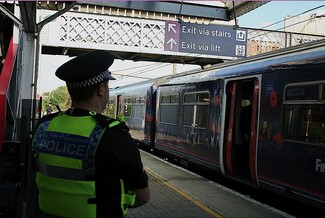
The recent dismissal of a serving officer from the British Transport Police for using anti-Traveller slurs should not be treated as a closed chapter. It should be the beginning of a deeper reckoning.
The officer was found guilty of gross misconduct after messages emerged in which he used derogatory language about Travellers and repeated harmful stereotypes linking the community with criminality. The fact that the comments were made in private does not diminish their seriousness. On the contrary, private language often reveals unfiltered attitudes and attitudes shape behaviour.
For Irish Travellers, this case resonates far beyond the particulars of one disciplinary hearing. It touches on a long and painful history of discrimination, marginalisation and mistrust between Traveller communities and state institutions.
Prejudice in Policing Is Not a Minor Matter
Policing relies on legitimacy. Public confidence depends on the belief that officers will act fairly and without prejudice. When those tasked with upholding the law express contempt for an ethnic minority even in private exchanges it undermines that legitimacy.
Irish Travellers have long been acknowledged as a distinct ethnic group in the UK. Yet anti-Traveller racism remains one of the most socially tolerated forms of prejudice. Derogatory language about Travellers is still too often excused as “banter” or dismissed as harmless stereotype. It is neither.
Language that frames an entire community as inherently suspect does not exist in a vacuum. It informs assumptions about who is credible, who is suspicious, and who belongs. In policing, such assumptions can influence discretionary decisions from stop-and-search encounters to assessments of victim credibility. This is why the issue cannot be reduced to personal misconduct alone. It is about institutional culture.
Accountability Is Necessary — But Insufficient
The officer’s dismissal was the correct outcome. Clear consequences matter. They send a signal that discriminatory language is incompatible with public service.
But the critical question is whether this case represents an aberration or a symptom.
If the latter, then meaningful reform requires more than disciplinary action after exposure. It requires proactive cultural change. Police forces must invest in comprehensive anti-racism training that includes specific, informed engagement with Traveller history and identity. They must build structured partnerships with Traveller advocacy groups. They must examine data and policies for patterns that may reflect unconscious bias.
Crucially, they must acknowledge anti-Traveller racism as racism not as a niche concern or a matter of “community tensions,” but as a human rights issue.
A Broader Social Reflection
Policing does not operate in isolation from society. Anti-Traveller sentiment is often normalised in public discourse, media narratives and everyday conversation. When stereotypes circulate unchecked, they create an environment in which discriminatory attitudes can flourish, including within public institutions.
The dismissal of one officer should therefore prompt broader reflection. Why does prejudice against Travellers remain socially permissible in ways that would be unacceptable if directed at other ethnic minorities? Why are harmful tropes about criminality still repeated with little scrutiny?
Addressing these questions requires political leadership as well as institutional will.
Trust Must Be Rebuilt, Not Assumed
For many Travellers, interactions with authority have historically been marked by suspicion rather than trust. Rebuilding confidence requires transparency, accountability and sustained engagement — not symbolic gestures.
The goal is not preferential treatment. It is equal protection under the law.
When members of an ethnic minority question whether those in uniform view them as citizens or as caricatures, democracy itself is weakened.
The dismissal in this case is a necessary step, but it cannot be the final word. If policing is to command the confidence of all communities, it must confront prejudice not only when exposed, but wherever it exists quietly, persistently, and without defensiveness. Only then can trust be restored on foundations of dignity and equality.
By Josie O Driscoll (Traveller) CEO GATE Herts
(Lead image: (Stock) British Transport Police Officer by Roger Carvell, CC BY 3.0, https://commons.wikimedia.org/w/index.php?curid=57503072)