England Does Not Have a Traveller Problem - A TT Long Read by Claire Rice

How six decades of policy have narrowed the space for nomadic life in England. Claire Rice, a Romany journalist, academic and campaigner, examines the changing face of nomadism in England, and the potential road ahead.
“The law rarely abolishes a way of life overnight. More often, it erodes it gradually until what was once ordinary becomes exceptional, and what was once accepted becomes merely tolerated.”
The Question Nobody Asks
Walk almost any ancient drove in England and you are walking through the history of movement.
Long before motorways, planning departments and local authority boundaries, Britain was a nation connected by mobility. Drovers moved livestock across counties, bargemen carried goods along rivers and canals, seasonal agricultural workers followed the harvest, Travelling Showpeople carried entertainment from town to town, and Romany Gypsies and Irish Travellers maintained distinct nomadic cultures rooted in kinship, trade and movement.
Travelling was not an anomaly. It was part of Britain’s economic, cultural and social fabric.
Today, however, one assumption sits quietly at the heart of almost every area of public policy.
That a successful citizen lives permanently in one place.
That a proper home has foundations. That stability requires immobility.
It is such a deeply embedded assumption that it has become almost invisible. Housing policy, planning law, health services, education, welfare, banking, insurance and even democratic participation all begin with the expectation that people possess a permanent address.
Mobility is rarely understood as another legitimate way of living. Instead, it is treated as an exception requiring management, regulation or, too often, enforcement.
This article asks a difficult question.
Has England, through the cumulative effect of six decades of housing, planning and enforcement policy, created a hostile policy environment for nomadism?
This is not an accusation of conspiracy or deliberate persecution.
Public policy is rarely shaped by a single decision or a single government. It evolves through hundreds of legislative amendments, planning decisions, funding choices and administrative practices that, viewed individually, may appear entirely reasonable.
Yet as the sociologist Zygmunt Bauman observed, modern societies often produce profound social change not through dramatic moments but through the gradual accumulation of ordinary decisions. Looking at Traveller policy through that lens reveals something striking.
England has never prohibited nomadism.
It has never made being a Romany Gypsy or an Irish Traveller unlawful.
It has never outlawed living in a caravan.
Instead, it has steadily reduced the places where nomadic life can be practised, while simultaneously increasing the powers available when people have nowhere lawful to stop. That distinction matters.
Because the issue facing many Travellers today is not whether travelling remains legal in principle.
It is whether it has become genuinely possible in practice.
A Country That Forgot It Once Travelled
There is a tendency within modern political debate to present nomadism as somehow outside the British experience, as though mobility arrived recently or belongs only to a small minority of communities, but history tells a different story; for centuries Britain depended upon movement.
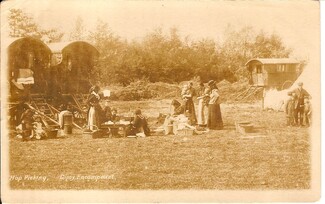
Drovers transported livestock across ancient roads linking Wales, Scotland and England. Canal families lived and worked on Britain’s waterways. Seasonal labourers travelled with the agricultural calendar. Fishing communities followed the coast. Travelling Showpeople brought fairs to villages long before permanent entertainment venues existed. Romany Gypsies have been part of British society for over five centuries, while Irish Travellers have maintained their own distinct ethnic identity, culture and traditions over generations.
Movement was not simply tolerated; it was economically necessary, and communities were built around routes as much as places.
The geographer Doreen Massey challenged the idea that places are static containers. Instead, she argued that places are created through relationships, interactions and movement. Places are processes rather than fixed points on a map, and that insight presents a challenge to contemporary housing policy: If place itself is created through movement, why has policy become almost entirely organised around permanence?
The answer lies not in one Act of Parliament but in a deeper cultural assumption that academics increasingly describe as sedentarism.
Sedentarism is the largely unquestioned belief that settled living is the normal, desirable and superior way to organise society. Like all dominant assumptions, it rarely needs to announce itself. It is embedded within institutions, planning systems and everyday administration until alternatives become almost unthinkable.
The mobility scholar Tim Cresswell famously observed that “mobility is never simply movement.” Movement carries meaning. It expresses identity, power, belonging and exclusion.

For many Travellers, travelling is not simply a method of getting from one place to another, it is family, it is work, it is history, it is culture, it is home.
Understanding that distinction is fundamental, because if movement forms part of cultural identity, then restricting the ability to move cannot be understood simply as regulating land use. It becomes a question of equality, culture and human rights.
That is precisely why the European Court of Human Rights recognised in Chapman v United Kingdom that living in a caravan could form an integral part of Gypsy identity and family life, engaging Article 8 of the European Convention on Human Rights.
The court did not establish an unlimited right to stop anywhere.
Nor did it exempt Travellers from planning law.
It recognised something more profound: that nomadism is not merely a lifestyle preference. For many people, it is an expression of identity itself.
That principle should have reshaped public policy. Instead, the decades that followed moved increasingly in the opposite direction.
The question is no longer whether England recognises Traveller identity.
The question is whether it has left sufficient space for that identity to be lived.
From Provision to Enforcement: The Quiet Transformation of Traveller Policy
If the story of Traveller policy were told solely through newspaper headlines, it would appear to be a history of unauthorised encampments, planning disputes and enforcement. In reality, it is something quite different. It is the story of a state gradually withdrawing from the responsibility to accommodate nomadism while simultaneously strengthening its ability to regulate and remove it.
This transformation did not occur overnight.
Nor can it be attributed to a single political party.
It has unfolded incrementally across successive governments, each adding another layer to a policy framework that increasingly assumes permanence while treating mobility as an administrative problem.
The result is not one dramatic act of exclusion. It is what the political scientist Murray Edelman described as the cumulative effect of ordinary governmental decisions.
Individually, each decision may appear technical or administrative. Together, they fundamentally reshape the relationship between citizens and the state. Traveller policy provides a compelling example of this phenomenon.
The promise of 1968
The Caravan Sites Act 1968 marked a significant moment in public policy. For the first time, Parliament acknowledged a simple but profound principle: if the state increasingly restricted where Gypsies could stop, it also carried a responsibility to provide lawful alternatives. Part II of the Act placed duties on county councils to provide sites for Gypsies residing in or resorting to their areas.
Implementation was inconsistent. Many authorities delayed. Some resisted entirely. Some sites were poorly located or inadequately designed. Yet the underlying principle was clear: nomadism was recognised as a legitimate way of life requiring public provision rather than simply public control.
It was an imperfect settlement. But it was a settlement, nonetheless.
The geographer Henri Lefebvre famously argued that space is never neutral; it is produced through political decisions about who belongs, where and under what conditions.
The 1968 Act represented an attempt — however incomplete — to produce space for nomadic life.
The turning point
Everything changed in 1994. The Criminal Justice and Public Order Act repealed the statutory duty requiring local authorities to provide Traveller sites. Councils retained powers to provide sites but no longer carried the same legal obligation to do so. At almost exactly the same moment that the state’s duty weakened, its enforcement powers strengthened.
This shift is perhaps the most important policy change in modern Traveller history. It fundamentally altered the relationship between Travellers and public authorities. Before 1994 the central question had been: How should government accommodate nomadism? After 1994 the dominant question increasingly became: How should government manage unauthorised encampments?
The language itself changed.
Accommodation gave way to enforcement.
Provision gave way to control.
The consequences were entirely predictable. If authorities are no longer required to create sufficient lawful stopping places, while planning restrictions continue to limit private site development, the shortage of authorised accommodation becomes almost inevitable. When lawful options diminish, unauthorised stopping does not arise because nomadism has suddenly increased. It arises because lawful alternatives have decreased.
This is not a moral judgement.
It is a question of supply and demand.

The evidence England cannot ignore
For many years Traveller organisations argued that the repeal of the statutory duty would create long‑term shortages. Those warnings have been borne out by the evidence. Friends, Families and Travellers’ report Kicking the Can Down the Road examined decades of planning and site provision across England. Its conclusions should concern anyone interested in effective public policy.
The report found that many local planning authorities had failed to allocate sufficient Traveller sites despite repeated national policy expectations to do so. The consequence is not simply an administrative shortfall. It is the production of conflict.
When lawful stopping places are absent, unauthorised stopping becomes more likely.
Communities become frustrated.
Residents become anxious.
Police become involved.
Local authorities incur enforcement costs.
Travellers experience repeated displacement.
The debate then focuses upon the visible consequence rather than the structural cause. Conflict becomes treated as a behavioural problem. Rarely is it examined as a policy outcome. The sociologist C. Wright Mills described this distinction as the difference between private troubles and public issues. The repeated eviction of Traveller families is often presented as an isolated event involving particular individuals. Viewed collectively, however, these incidents reveal something much larger. They expose a structural failure to reconcile planning, housing, equality and nomadism within a coherent national framework.
Recognition without implementation
Recent years have brought welcome developments. Planning Policy for Traveller Sites once again recognises the traditional and nomadic way of life of Travellers. The revised planning definition introduced in 2024 broadened recognition of cultural nomadism after years of criticism that previous definitions excluded many families.
Recognition matters. Language matters. Definitions matter. But definitions do not create land. Policy statements do not construct transit sites. Planning guidance does not install water supplies, drainage systems or safe access roads. Recognition without implementation risks becoming symbolic rather than substantive.
This distinction lies at the heart of modern Traveller policy. England increasingly recognises Traveller identity. It has become less successful at creating the physical conditions necessary for that identity to flourish. The contradiction is striking.
Government accepts that nomadism exists.
Planning policy acknowledges it.
Equality law protects aspects of it.
Human rights jurisprudence recognises its cultural significance.
Yet practical opportunities to live nomadically continue to shrink.
Recognition, in other words, has not always translated into accommodation.
A policy judged by outcomes
Governments should ultimately be judged not only by the intentions of legislation but by its practical consequences. After decades of reform, England still faces a chronic shortage of permanent pitches in many areas, very limited transit provision, repeated disputes over unauthorised encampments and continuing tensions between settled and Traveller communities.
These outcomes cannot reasonably be understood solely through the behaviour of Travellers. They must also be understood through the cumulative consequences of public policy. If policy consistently produces the same problems over several decades, it becomes legitimate to ask whether the problem lies not simply with those subject to the policy, but with the policy itself.
That is the uncomfortable question England has largely avoided. Not whether Travellers should obey the law. They should. Not whether local communities deserve protection. They do. But whether successive governments have created a policy framework capable of accommodating nomadism in the twenty‑first century. The evidence increasingly suggests that they have not.
When provision becomes discretionary while enforcement becomes increasingly available, conflict is no longer an accident of policy. It becomes one of its most predictable outcomes.

A Home Without Somewhere to Put It
Perhaps the greatest misunderstanding within English housing policy is that homelessness is simply the absence of a home. It is not. In law, homelessness is far more complex.
A person may own a caravan. A boat. A motorhome. A converted horsebox. Even a beautifully maintained traditional wagon. They may have invested every penny they possess into creating a safe, warm and secure home. Yet they may still be legally homeless.
Why? Because there is nowhere lawful to place it.
This is one of the least understood principles within English housing law. It quietly acknowledges something profound. Home is not merely the physical structure in which we sleep. Home is also the relationship between that structure and the place where it can lawfully exist. Without lawful space, even the most carefully maintained home becomes precarious.
The philosopher Gaston Bachelard described the home as more than a building. In The Poetics of Space, he argued that home is the place where identity, memory and imagination take root. It is an emotional and social space rather than simply an architectural one.
For many Travellers this observation carries particular significance.
The caravan is not temporary accommodation.
It is home.
It is where children are raised.
Where birthdays are celebrated.
Where elders are cared for.
Where traditions are passed between generations.
Where family life unfolds.
Public debate frequently speaks of caravans as though they are an inferior substitute for housing. For Traveller families they are housing. Indeed, they are often considerably more than that. They are cultural space.

The hierarchy of homes
Modern England appears to have developed what might be described as a hierarchy of legitimacy. A detached house is unquestionably recognised as a home. A terraced house is equally accepted. A flat. A bungalow. A residential park home. Each is protected by extensive legal frameworks, planning systems and public investment.
Move further down that hierarchy and certainty begins to disappear. A narrowboat is recognised but often struggles against shortages of residential moorings and increasing pressures upon waterways. A caravan occupied by a Traveller family frequently becomes the subject of planning dispute. A motorhome occupied because someone cannot afford private rent may become an enforcement issue.
The physical structure has changed remarkably little. Society’s willingness to recognise it as legitimate has changed considerably.
This raises an uncomfortable question.
What transforms a dwelling into a recognised home?
Is it the bricks from which it is built?
Or is it the person who lives within it?
Sedentary privilege
There is another concept worth considering. Throughout this article I have argued that English public policy is shaped by an assumption that permanence represents the natural form of citizenship. Perhaps this could be described as sedentary privilege.
Sedentary privilege is not an accusation. Nor is it an attack upon settled communities. It is an observation that almost every major public institution has been designed around fixed residence. To access healthcare, education, banking, insurance, voting, benefits, planning systems and countless everyday services, permanence is assumed. The permanent address becomes the gateway to citizenship itself.
Those whose lives are mobile are required continually to explain themselves. To prove themselves. To justify themselves. To adapt themselves. Mobility becomes an administrative inconvenience.
Yet mobility itself is not the problem.
Our institutions’ inability to accommodate it is.
The sociologist Pierre Bourdieu observed that the most powerful forms of domination are often those that become accepted as natural. Perhaps the greatest success of sedentarism is precisely this.
It no longer appears ideological.
It simply appears normal.

The Housing Crisis Changes Everything
For decades many dismissed Traveller accommodation as a niche policy issue affecting only a relatively small ethnic minority. That assumption is becoming increasingly difficult to sustain. Across England a growing number of people now live in vans, converted buses, motorhomes and boats.
Some have consciously rejected conventional housing. Many have not. They have been pushed towards mobile living by soaring house prices, insecure tenancies, stagnant wages and the cost‑of‑living crisis.
Bristol has become one of the clearest examples. The city has acknowledged a substantial population of vehicle dwellers and has developed specific policy responses recognising that many people are living in vehicles not through lifestyle preference alone, but because the housing market has left them with few realistic alternatives.
This is a remarkable moment. For perhaps the first time in generations, mainstream housing policy has been forced to confront the reality that mobile living is no longer confined to traditional Traveller communities. England is producing new forms of nomadism. Not cultural nomadism. Economic nomadism.
This distinction is critically important. Van dwellers are not Travellers. Boat dwellers are not Romany Gypsies. The histories, identities and legal recognition of these communities are profoundly different. Conflating them would erase those differences.
Yet they increasingly encounter remarkably similar structural barriers. Each may possess a home. Each may nevertheless struggle to find somewhere lawful, secure and serviced in which that home can exist.
In exposing this contradiction, the housing crisis has inadvertently strengthened a point Traveller organisations have made for decades. The issue has never simply been caravans. The issue has always been space.
Perhaps this is where the national conversation needs to change. For too long Traveller accommodation has been treated as a specialist issue, discussed separately from mainstream housing policy. That separation no longer reflects reality.
The questions raised by Traveller communities are increasingly the same questions being asked by people living on Britain’s waterways, by families forced into vans through homelessness, and by local authorities struggling to respond to forms of housing that do not fit conventional models.
Who decides what counts as a home? Who decides where homes may exist? Can public policy recognise forms of dwelling that challenge settled assumptions?
Traveller policy is no longer simply about Travellers. It has become a lens through which we can examine the strengths — and the limitations — of England’s wider housing system.
The irony is striking.
For decades Traveller communities warned that England lacked a coherent approach to nomadism.
Today, as housing pressures intensify, more people than ever are discovering the consequences of a system that has never truly made room for movement.
The question is no longer whether England recognises caravans as homes. The question is whether England is prepared to recognise that homes themselves do not all stand still.

One caravan, two legal systems
Perhaps no contradiction illustrates England’s approach to mobile living more clearly than this.
Place two caravans side by side. Give them the same dimensions. The same construction. The same insulation. The same windows. The same kitchen. The same bathroom. The same family living inside.
Physically, they may be almost identical. Legally, however, they may exist in entirely different worlds.
For decades Parliament has progressively strengthened the rights of many people living in residential park homes. Successive reforms have improved consumer protection, strengthened local authority enforcement powers, regulated site rules, improved security for residents and recognised that park home residents deserve dignity, certainty and protection.
Those reforms were right. Nobody should argue otherwise. Everyone deserves safe, secure accommodation.
The question this article asks is different. Why has the same political determination not been consistently applied to many Traveller sites?
This is not an argument that park home residents have received too much protection. It is an argument that Traveller communities have too often received too little.
Equality cannot stop at the site entrance
For generations Traveller organisations have highlighted the conditions found on some local authority and private Traveller sites. Many provide safe and supportive environments. Others do not.
Reports have documented ageing infrastructure, poor drainage, inadequate maintenance, environmental hazards, unsafe road layouts and a chronic lack of long‑term investment. These are not merely questions of comfort. They are questions of public health. Questions of dignity. Questions of equality.
If the State provides accommodation, it also assumes responsibility for ensuring that accommodation is safe, properly maintained and fit for human habitation. That principle should apply regardless of whether homes are built from brick, timber or aluminium.
Yet too often Traveller sites appear to occupy a curious position within public policy. Governments count them. Planning authorities allocate them. Statistics record them. But the lived experience of residents frequently receives far less attention than the number of pitches themselves.
A pitch is not a policy success simply because it exists. Its condition matters. Its safety matters. Its environment matters. Its management matters.

Ver Meadows: beyond counting pitches
The experience of residents at Ver Meadows in Hertfordshire illustrates why quality cannot be separated from provision. In 2025 a devastating fire destroyed homes and transformed lives. Subsequent concerns regarding emergency access, together with longstanding questions raised by residents about infrastructure and site management, highlighted a wider issue that extends far beyond one location.
The lesson from Ver Meadows is not simply about fire. It is about what happens when Traveller accommodation is measured primarily through quantity rather than quality.
Public debate often asks:
“How many pitches are there?”
It asks far less frequently:
“What are those pitches actually like to live on?”
No housing strategy would judge the success of mainstream housing simply by counting front doors. It would examine construction standards. Infrastructure. Safety. Environmental quality. Resident wellbeing. Long‑term maintenance.
Traveller sites deserve exactly the same scrutiny. Not because Traveller communities seek special treatment.
Because they seek equal treatment.
Environmental inequality
There is another uncomfortable question that deserves greater attention. Where are Traveller sites located?
Across England many sites have historically been developed adjacent to industrial estates, major roads, railways, waste facilities, sewage treatment works and other forms of development that would often be considered unsuitable for conventional residential neighbourhoods. Not every site. But enough to raise serious questions.
Environmental justice scholars have long argued that disadvantaged communities disproportionately experience environmental harms. Traveller communities should not be excluded from that conversation.
If a planning authority would hesitate before placing a new housing estate beside heavy industry or persistent environmental nuisance, why is similar concern not always evident when Traveller accommodation is involved?
Equality is not achieved simply by providing land.
It is achieved by providing land of equal quality.

The hidden cost of underinvestment
Poor accommodation carries consequences far beyond housing itself. Children struggle to study where infrastructure is inadequate. Health inequalities deepen where environmental conditions are poor. Relationships between residents and authorities deteriorate where maintenance concerns remain unresolved. Trust is eroded. Conflict becomes normalised.
The costs are then borne elsewhere. Health services. Social care. Planning enforcement. Emergency services. Legal proceedings. Complaints. Litigation.
What appears initially as a saving through limited investment frequently returns as significantly greater public expenditure. Good housing has always been preventative policy. Traveller accommodation should be viewed no differently.
Homes deserve equal respect
Perhaps the greatest injustice lies not simply in poor infrastructure. It lies in expectation. Traveller families are too often expected to tolerate conditions that wider society would reject almost immediately.
The sociologist Richard Sennett once wrote that respect is not an abstract moral value but something communicated through institutions and everyday interactions. Housing communicates respect. Investment communicates respect. Maintenance communicates respect. Safe infrastructure communicates respect. Neglect communicates something else.
The measure of equality is not whether Traveller sites exist. It is whether they reflect the same standards of dignity, safety and care that the rest of society expects for itself.
England has become accustomed to debating whether Travellers should have sites. Perhaps it is time we began asking a different question. What kind of sites would we consider acceptable for our own families? If the answer would not satisfy us, it should not satisfy Traveller communities either.
Equality begins not with counting pitches, but with ensuring that every place called home is treated with equal dignity.

The New Nomads: When the Housing Crisis Meets an Outdated Housing Model
For generations, Traveller accommodation has been treated as a specialist issue. It has been discussed as though it concerns only a relatively small number of people whose lives exist somehow outside the mainstream. That assumption no longer reflects reality.
England is changing. Not because millions of people have suddenly chosen to become nomadic. But because the cost of remaining sedentary has become unaffordable for increasing numbers of people.
Across the country, vans have become homes.
Motorhomes have become permanent residences.
Converted buses have become family accommodation.
Boats have become alternatives to the private rented sector.
What was once regarded as unusual is becoming increasingly visible.

The reasons vary. Some choose mobile living because they value simplicity, independence or environmental sustainability. Many do not. Many have arrived there through necessity rather than preference.
Escalating rents.
Unaffordable house prices.
Insecure private tenancies.
The continuing cost‑of‑living crisis.
Relationship breakdown.
Redundancy.
Ill health.
For an increasing number of households, mobility has become less a lifestyle than a survival strategy. This distinction matters. Economic necessity should never be romanticised as

Bristol and the changing face of housing
Few places illustrate this transformation more clearly than Bristol. Over recent years the city has witnessed a significant increase in people living in vans, motorhomes and other vehicles.
Bristol City Council has responded by developing one of the first dedicated Vehicle Dweller Strategies in England, acknowledging that vehicle dwelling has become part of the city’s wider housing landscape.
Importantly, Bristol has recognised that many vehicle dwellers are not members of recognised Traveller communities. Nor should they be described as such. Instead, they represent something different. A new housing reality.
The city has attempted to respond not solely through enforcement but through engagement, designated areas and policy development. Whether every aspect of Bristol’s approach succeeds is open to debate. What matters is something more fundamental.
The city has recognised that this is, at least in part, a housing issue. That acknowledgement alone represents an important shift.
The warning Traveller communities gave decades ago
Traveller organisations have argued for generations that England lacks a coherent policy for mobile living. For years those arguments were often dismissed as niche concerns. Yet the housing crisis has unexpectedly strengthened them.
The questions being asked today by vehicle dwellers are remarkably similar to those that Romany Gypsies and Irish Travellers have been asking for decades.
Where can we lawfully stay.
How do we register with a GP.
How do children access education.
How do we receive post.
Where do we dispose of waste.
How do we obtain insurance.
How do we participate in civic life when every administrative system assumes permanence.
These questions are no longer confined to Traveller sites. They are increasingly becoming questions for housing policy itself.
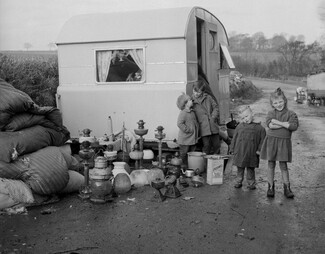
The administrative state and the fixed address
The modern state has become remarkably dependent upon the postcode. A postcode opens a bank account. Registers a child at school. Determines eligibility for public services. Provides access to healthcare. Enables electoral registration. Confirms identity. Obtains insurance. Receives correspondence.
The address has quietly become one of the principal gateways to citizenship.
For most people this presents little difficulty. For those whose lives are mobile, it can become a continual negotiation with bureaucracy.
The sociologist Anthony Giddens argued that modern societies increasingly organise everyday life through systems of administrative trust. Those systems work efficiently — provided individuals fit the assumptions upon which they were designed.
Traveller communities have long understood what happens when they do not. Increasingly, so do vehicle dwellers.
The challenge therefore extends beyond accommodation.
It concerns the very architecture of citizenship itself.
Mobility is not policy failure
There is another assumption that deserves closer examination. Modern political debate often treats mobility as evidence that something has gone wrong. People move because they have failed. Because they cannot afford housing. Because they have nowhere else to go.
Sometimes that is true.
But it is not universally true.
For Romany Gypsies, Irish Travellers and Travelling Showpeople, movement has never been merely a consequence of disadvantage. It is woven into cultural identity, family life and history. To confuse cultural nomadism with economic displacement is to misunderstand both.
Yet policy increasingly struggles to distinguish between them because it lacks a coherent understanding of mobility itself. Everything becomes compressed into one category.
An enforcement issue.
A planning issue.
A homelessness issue.
A parking issue.
What is missing is a broader conversation about mobility as a legitimate way of organising life.

Towards a National Mobility Strategy
Perhaps England has reached a point where it needs to think differently. Not simply about Traveller accommodation. Not simply about homelessness. But about mobility itself.
What would happen if Government developed a National Mobility Strategy alongside its housing strategy? One that recognised the legitimate accommodation needs of:
Romany Gypsies.
Irish Travellers.
Scottish Gypsy/Travellers.
Travelling Showpeople.
People living on Britain’s waterways.
Seasonal mobile workers.
Vehicle dwellers experiencing homelessness.
Those choosing forms of low‑impact mobile housing.
Such a strategy would not remove planning controls. Nor would it legitimise irresponsible development or unauthorised occupation of land. Rather, it would begin from a different premise: that movement itself is not inherently a policy failure. It is a form of dwelling that requires thoughtful governance rather than simple enforcement.
The historian Tony Judt once wrote that one of the principal purposes of public policy is to help societies imagine alternatives. England’s housing system currently imagines only one destination. Permanent settlement.
Perhaps the greatest lesson offered by Traveller communities is that human beings have always lived in more than one way. The question for the twenty‑first century is whether public policy is capable of recognising that simple historical truth.
The housing crisis has not created England’s accommodation dilemma. It has merely exposed a weakness that Traveller communities have lived with for generations.

A Hostile Policy Environment?
Words matter. Particularly in public policy. Few phrases have carried greater political weight in recent British history than “hostile environment”. It has become synonymous with a specific approach to immigration policy and, understandably, evokes strong reactions.
This article does not argue that Traveller policy is the same as immigration policy. Nor does it suggest that governments have consciously pursued identical objectives. The comparison would be both inaccurate and unfair.
Instead, this article asks a narrower — and perhaps more important — question.
Can a hostile environment emerge without being explicitly declared?
Can it develop gradually through the cumulative effect of legislation, planning policy, administrative systems, funding decisions and public discourse?
Political theorists have long argued that power rarely operates through prohibition alone. Michel Foucault observed that modern states often govern by organising the conditions under which people live, shaping what becomes normal, possible and acceptable. Power, he argued, is exercised not only through law but through institutions, administrative practices and everyday routines.
Viewed through that lens, the experience of many Traveller communities begins to look less like a series of unrelated policy decisions and more like the cumulative construction of an environment in which nomadic life becomes progressively more difficult to sustain.
No single Act of Parliament abolished nomadism.
No minister announced that travelling should cease.
No government declared that caravans were no longer homes.
Yet over successive decades:
the statutory duty to provide sites was removed;
transit provision remained chronically inadequate in many areas;
planning restrictions made private site development increasingly difficult;
enforcement powers expanded;
public authorities often struggled to provide culturally appropriate accommodation;
and many administrative systems continued to assume permanent residence as the norm.
Each development can be debated individually. Taken together, however, they raise a legitimate question.
What practical space remains for nomadic life?

Regulating behaviour or discouraging identity?
Every democratic society has the right — indeed the duty — to regulate land use. Planning exists for good reason. Communities deserve protection. Environmental standards matter. Nobody is arguing otherwise.
The question is not whether regulation should exist. The question is whether regulation, when combined with insufficient lawful alternatives, begins to discourage the very way of life that planning policy simultaneously claims to recognise.
This distinction is critical. The European Court of Human Rights has repeatedly acknowledged that, for many Gypsies and Travellers, living in caravans is intimately connected to cultural identity and family life. That does not create an unlimited right to develop land or occupy any location.
It does, however, require public authorities to recognise that decisions about accommodation engage more than questions of land management.
They engage questions of culture.
Identity.
Equality.
Proportionality.
A planning decision is therefore never merely technical. It can also have cultural consequences.
Equality beyond identical treatment
There is a persistent misconception that equality means treating everyone exactly the same. Modern equality law rejects such a simplistic understanding.
The Public Sector Equality Duty requires public authorities not merely to avoid discrimination but to have due regard to advancing equality of opportunity and fostering good relations between different communities.
Sometimes equal treatment requires different provision.
Wheelchair users require ramps rather than stairs.
People with visual impairments require accessible information.
Children require schools.
Older people may require supported housing.
Likewise, communities with a recognised cultural tradition of nomadism may require accommodation that enables that culture to continue. Providing culturally appropriate accommodation is not preferential treatment. It is the practical expression of substantive equality.

The geography of injustice
Justice is not experienced equally across space. The geographer Edward Soja argued that justice possesses a geography. If justice has a geography, then so too does injustice.
Where homes are built matters.
Where services are located matters.
Where communities are expected to live matters.
Traveller organisations have repeatedly drawn attention to sites situated beside major roads, industrial estates, sewage treatment works and other environmentally challenging locations. Not every site. But enough to reveal a pattern that deserves closer examination.
Environmental justice researchers have shown that disadvantaged communities frequently experience disproportionate exposure to environmental harms. Traveller communities should not remain invisible within that conversation.
If planning decisions routinely locate one community in places that others would reject, the issue extends beyond planning.
It becomes one of equality.
The politics of visibility
Perhaps the greatest irony is that Traveller communities often become most visible precisely when policy has failed. Unauthorised encampments receive media attention. Roadside stopping becomes headline news. Public frustration is entirely understandable where communities experience disruption.
Yet visibility begins only at the point of conflict. The invisible stages receive far less attention.
The years waiting for a site. The unsuccessful planning applications. The absence of transit provision. The deterioration of existing sites. The repeated requests for investment. The shortage of culturally appropriate accommodation.
Conflict is visible.
Policy failure is often invisible.
The philosopher Hannah Arendt warned that political responsibility cannot be judged solely by dramatic events. It must also be judged by the ordinary administrative processes through which those events become possible.
Perhaps the same is true here.
Unauthorised encampments do not emerge from nowhere.
They emerge within a policy environment.

The question England must answer
This article has deliberately avoided asking whether Travellers deserve special treatment. That is the wrong question.
The question is whether England has created sufficient lawful space for a recognised nomadic culture to continue existing.
If the answer is yes, then the current level of conflict requires another explanation.
If the answer is no, then responsibility cannot rest solely with Traveller communities.
It must also rest with the public policies that have shaped the choices available to them.
This is ultimately not an argument about planning.
Nor policing.
Nor even housing alone.
It is an argument about whether modern England still possesses the political imagination to accommodate more than one legitimate way of living.
The evidence suggests that, for all our celebration of diversity, we have become remarkably uncomfortable with one of humanity’s oldest forms of existence:
Movement.
Hostility is not always expressed through prohibition. Sometimes it is revealed by the gradual disappearance of the space in which a way of life can survive.

Conclusion: Making Room
The purpose of this article has not been to argue that planning law should disappear. Nor has it been to suggest that every unauthorised encampment is justified, or that settled communities should simply accept disruption without question.
Democratic societies require rules.
Planning matters.
Environmental protection matters.
Communities matter.
Traveller communities know this as well as anyone else.
The real question is whether the rules have remained balanced.
For more than half a century England has attempted to manage nomadism largely through planning control, enforcement powers and increasingly complex administrative systems. Those measures undoubtedly have their place. Yet they have not resolved the underlying problem.
The same disputes continue.
The same tensions recur.
The same headlines reappear.
The same questions remain unanswered.
At some point, good policymaking requires us to ask whether the policy itself deserves reconsideration.

The philosopher John Rawls invited us to imagine designing society from behind what he called a veil of ignorance. We should imagine that we know nothing about the circumstances into which we will be born. We do not know whether we will be wealthy or poor, disabled or non‑disabled, settled or nomadic.
It is a powerful thought experiment because it asks us to design institutions that would be fair regardless of where we eventually find ourselves.
Apply that principle to Traveller accommodation.
Would we create a system in which lawful stopping places remain chronically scarce while enforcement powers continue to expand?
Would we consider it acceptable for some communities to spend years waiting for suitable sites while public debate focuses almost exclusively upon their presence when they have nowhere else to go?
Would we accept housing conditions for our own families that we too often tolerate on some Traveller sites?
Would we design public services that quietly assume everyone lives behind the same kind of front door?
If the answer is no, then perhaps the problem is not simply one of implementation.
Perhaps it lies within the assumptions that shape the system itself.
This is where Traveller policy speaks to a much wider national conversation.
England is entering a period of profound housing change. The private rented sector has become increasingly unaffordable for many households. Home ownership remains beyond the reach of growing numbers of young people. Local authorities face rising homelessness alongside severe financial pressures.
At the same time, more people are living in vans, motorhomes and on Britain’s waterways — not always by choice, but because the conventional housing market has failed to meet their needs.
Traveller communities have lived with the consequences of a housing system built almost exclusively around permanent settlement for generations. Now, increasingly, others are beginning to encounter similar structural limitations.
That does not make everyone a Traveller.
Nor should it.
Romany Gypsies, Irish Travellers, Scottish Gypsy/Travellers and Travelling Showpeople possess distinct histories, cultures and legal recognition that deserve to be understood on their own terms.
What it does suggest is that the questions Traveller organisations have raised for decades are no longer niche questions.
They are becoming national questions.
How should England accommodate mobility?
How should planning distinguish between harmful development and culturally significant nomadism?
How should housing policy respond to forms of dwelling that challenge traditional assumptions?
How should public services adapt to citizens whose lives do not fit neatly into systems designed around permanence?
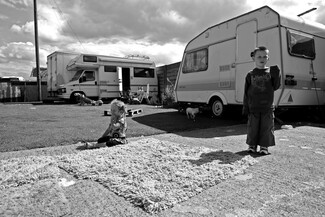
These are not questions for Traveller communities alone. They are questions for Parliament. For local government. For planners. For housing providers. For public health. For academics. For all of us.
The answers will not be found in enforcement alone. Nor in site provision alone. Nor in planning reform alone.
They require something more difficult: a willingness to rethink one of the deepest assumptions in modern public policy — that there is only one legitimate way to inhabit space.
Perhaps the greatest lesson Traveller communities offer contemporary Britain is not about caravans or planning at all.
It is about imagination.
For centuries these islands contained many ways of living. Movement and settlement were not opposites. They were different expressions of belonging.
Some people belonged to a village.
Others belonged to a route.
Some belonged to a street.
Others belonged to a network of stopping places linked by family, history and memory.
Both were part of Britain.
Somehow, in the pursuit of administrative simplicity, we have forgotten that.
We now speak confidently about cultural diversity, religious diversity and social diversity. Yet we rarely speak about diversity in the ways human beings make their homes.
Perhaps that is the conversation we should now begin.
Not because everyone wishes to live a nomadic life.
But because a society that genuinely values diversity must surely have room for more than one way of dwelling.
The measure of a civilised society is not simply the quality of the homes it builds.
It is whether it has the wisdom, the confidence and the generosity to make room for those whose homes look different from its own.
England has spent decades asking where Travellers should go.
Perhaps it is finally time to ask a different question.
Where does England want to go?
By Claire Rice
A Travellers Times Long Read
(Top image: Before Appleby, 2024 (c) Eszther Halasi)
If you liked this, try these other quality in-depth Long Reads published by the Travellers Times:
'Revolution!' - Hope rises for the 'wounded souls' of Hungary's Roma | Travellers Times