Critical Friends, Not Enemies: Why Gypsy and Traveller Communities Are Demanding Better
OPINION - ‘My family live on sites. My community live on sites. The issues being discussed in meeting rooms and council offices are not abstract policy debates to us. They are our homes, our children, our elderly relatives, and our daily lives – and councils must do better,’ says Claire Rice, Project Coordinator at GaTEssex CIC
I am a Romany Gypsy woman born and raised in Essex. I am also Project Coordinator at GaTEssex CIC, a community-led organisation supporting Gypsy and Traveller people across Essex and beyond. Alongside lived experience, I bring years of frontline advocacy work, safeguarding experience, professional training, and academic study in criminology and psychology.
Most importantly though, this is personal.
My family live on sites. My community live on sites. The issues being discussed in meeting rooms and council offices are not abstract policy debates to us. They are our homes, our children, our elderly relatives, and our daily lives.
Over recent years, I have sat in countless meetings with local authorities, professionals, housing departments, safeguarding teams, and policy officers. Some conversations have been constructive. Others have been deeply frustrating. But one thing has become increasingly clear to me:
Gypsy and Traveller communities are too often still being managed rather than genuinely listened to. Across the country, many councils continue to approach Traveller site management through top-down systems built around control, enforcement, and institutional convenience rather than meaningful collaboration. Decisions are made about communities rather than with them. Residents are spoken about as operational problems instead of recognised as people with knowledge, expertise, and rights, and then authorities wonder why relationships break down.
The reality is that many Gypsy and Traveller people have become experts out of necessity. We know our sites better than anyone. We know where the risks are. We know which systems are failing. We know when governance is weak. We know when policies are not being followed consistently. We know when corners are being cut because we live with the consequences, and that knowledge matters.
Too often, lived experience is treated as emotional opinion while institutional voices are automatically treated as expertise. But lived experience is expertise. In fact, some of the strongest safeguarding, risk awareness, and practical problem-solving comes directly from communities themselves.
I have challenged councils directly on issues relating to governance, fire safety, safeguarding, surveillance, contractor verification, data protection, and accountability. Not because I enjoy conflict, but because communities should never be expected to quietly accept poor process, weak oversight, or decisions made outside proper governance frameworks.
When authorities operate in silos, problems grow. Departments become isolated from wider corporate oversight. Policies drift. Informal practices develop. Decisions get made because they are “convenient” rather than because they are lawful, proportionate, or transparent.
And Gypsy and Traveller communities often feel the impact of that first.
One of the biggest problems is the lingering attitude in some areas that “the professionals know best.” Of course professional expertise matters. Fire officers, safeguarding teams, legal departments, housing officers, and policy workers all have important roles. But expertise does not sit solely within institutions.
A Romany grandmother who has lived on sites her entire life may understand practical fire risks better than somebody reading from a checklist. A Traveller parent understands how families actually use space, how overcrowding impacts safety, and how site dynamics work in real life, not just on paper. Communities understand the realities of their own lives. That does not make us anti-authority. It makes us equal stakeholders.
What many of us are asking for is actually very simple:
Treat us with dignity.
Work with us, not around us.
Apply the same governance standards you would apply anywhere else.
Be transparent.
Be accountable.
Listen when communities raise concerns instead of dismissing them as “difficult.”
Because scrutiny is not hostility and challenge is not disrespect, and asking public authorities to operate lawfully and transparently should never be viewed as unreasonable.
I often describe myself as a “critical friend.” I will tell institutions uncomfortable truths when I believe they are getting things wrong. I can be blunt, direct, and very outspoken when necessary. But my criticism is not rooted in hatred of councils or professionals. In fact, I believe most people working within these systems do want to help. The problem is often structural, cultural, and institutional rather than personal.
I have sat in meetings where I have challenged professionals fiercely one moment and then shared a joke and a cup of tea the next. That is because this is not about ego or “winning.” It is about making sure our communities are treated safely, lawfully, and fairly.

Alongside criticism, we also need to recognise good practice when we see it. Authorities that genuinely engage with communities, improve governance, admit mistakes, and work collaboratively deserve credit for that too. Accountability and partnership can exist together.
What Gypsy and Traveller communities need now is not more paternalism, more distance, or more silo working. We need co-production. We need collaboration. We need institutions humble enough to recognise that communities hold valuable expertise too.
The strongest public bodies are not the ones that avoid criticism. They are the ones willing to listen, adapt, and improve.
And the strongest communities are not the ones that stay silent. They are the ones prepared to stand up, speak clearly, and insist that their people are treated with dignity and respect.
We are not asking for special treatment, we are asking for equal standards, equal protection, and equal humanity. And that should never be controversial
By Claire Rice BSc MA
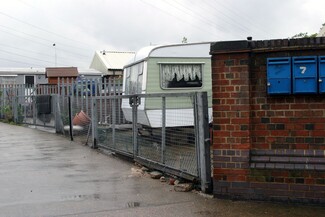
(Photograph: Stock photo – Clays Lane Traveller site in East London before it was redeveloped (C) Elizabeth Blanchett)